The Overplus
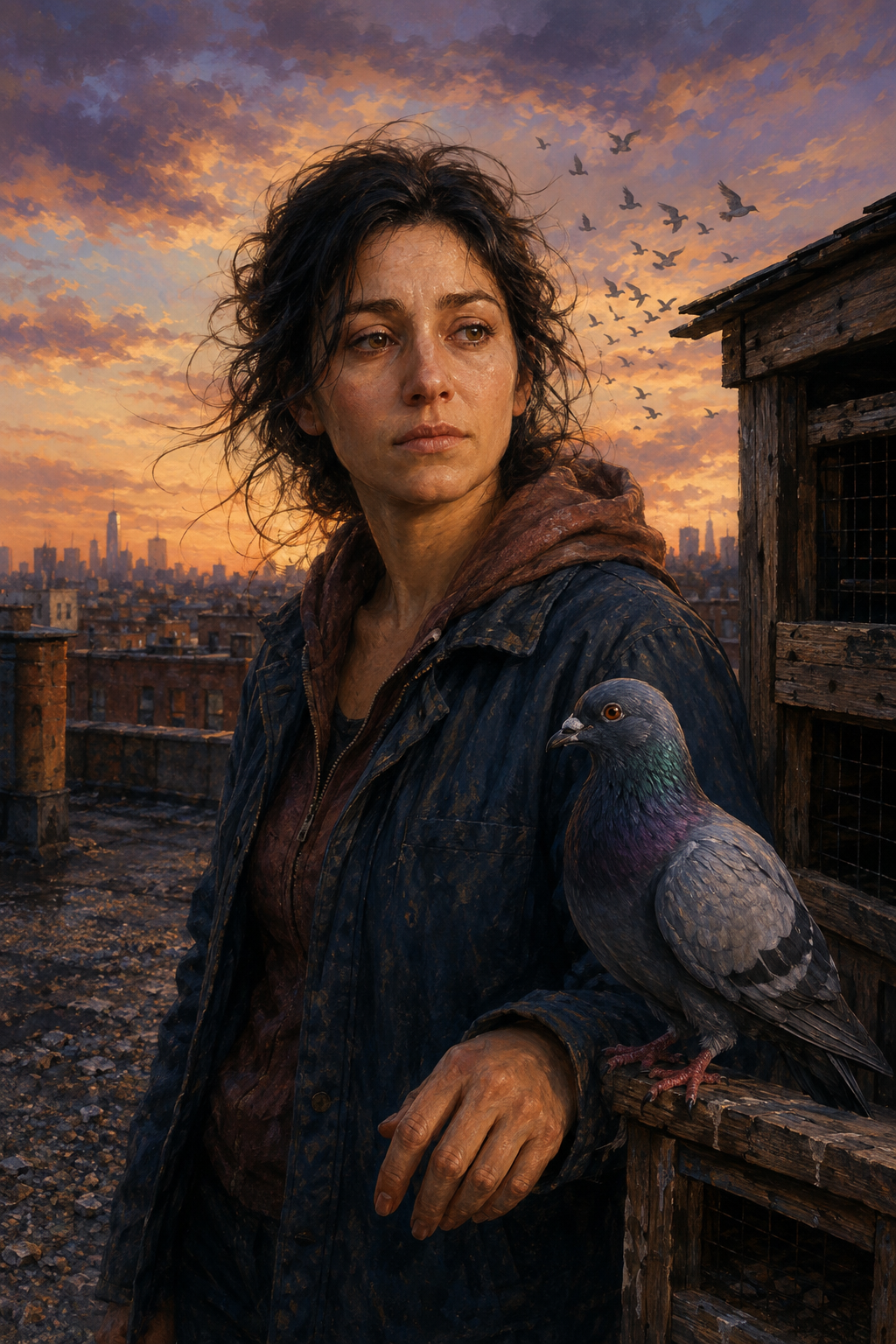
I count rails. Most days that is the whole of the job.
Synopsis
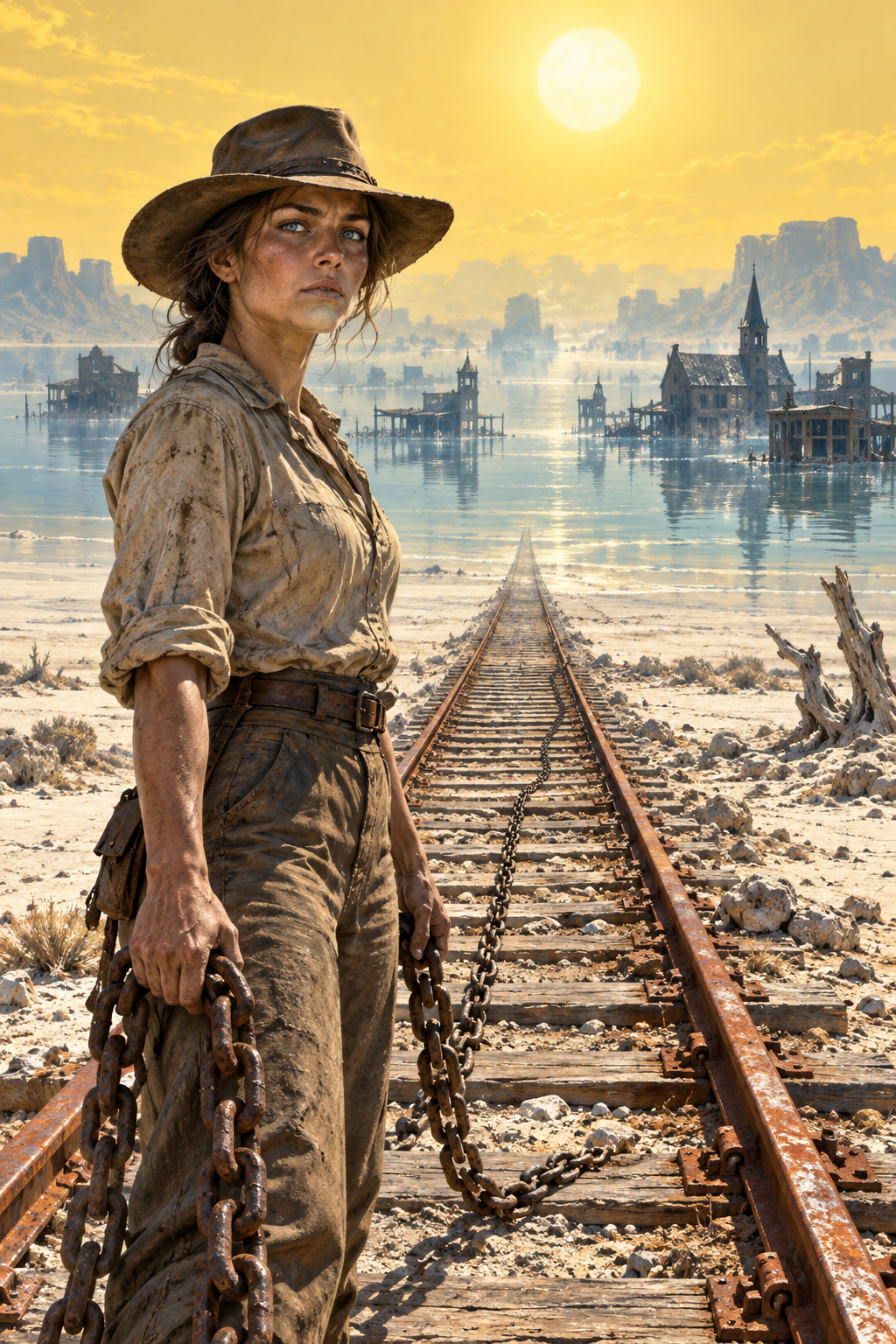
Ottoline Vance walks forty miles of Cimarron & Western track in New Mexico Territory in 1897, and every September the mile between milepost 212 and milepost 213 measures twice as long as it has any right to. The railroad has a name for it, the overplus, and a printed line in the back of the tally book where the walker is expected to write "no exception" once a year and take eleven dollars for the trouble. Her father wrote those two words six times before he walked into the extra mile in 1886 and did not come out. Otto has written them six times since. The year the last unpaid claimant on the old Bellwether land dies, the overplus opens onto the drowned town itself on its final morning, and Otto finds her father inside it, sixty years old and still shimming the same low joint, with eleven years of identical entries in a tally book and a torn page from the 1885 right-of-way plat that he certified, falsely, as abandoned ground. What the mile is, is a bill nobody ever wrote. So Otto writes it: chains the distance, counts the rails, copies down eleven patents and seventeen hundred and sixty acres, computes twelve years of interest at the company's own rate, and signs the exception in the company's own book. The debt gets recorded and the mile closes. Her father walks out, and he is not the man who went in, and nothing about that is a rescue.
The Overplus
Story
I count rails. Most days that is the whole of the job.
Three hundred and forty miles of Cimarron & Western lie between the Alkali Wells yard and the Colorado line, and I walk my forty of them twice a week with a gauge bar on my shoulder and a tally book buttoned inside my coat. Thirty-foot rail. A hundred and seventy-six to the mile. A man at a dance in Springer once asked what a woman finds to do out there all day, and I told him arithmetic, and he laughed, and I let him keep it.
Between milepost 212 and milepost 213 there are three hundred and fifty-two.
Not always. Eleven months out of the twelve it is a mile like any other tired mile, soft ballast, a low joint at the north end that I have written up four years running and that nobody has ever come out to shim. Then September turns over and the count doubles, and there is a mile of Cimarron & Western main line sitting in the middle of my division that no survey in the Territory has ever heard of.
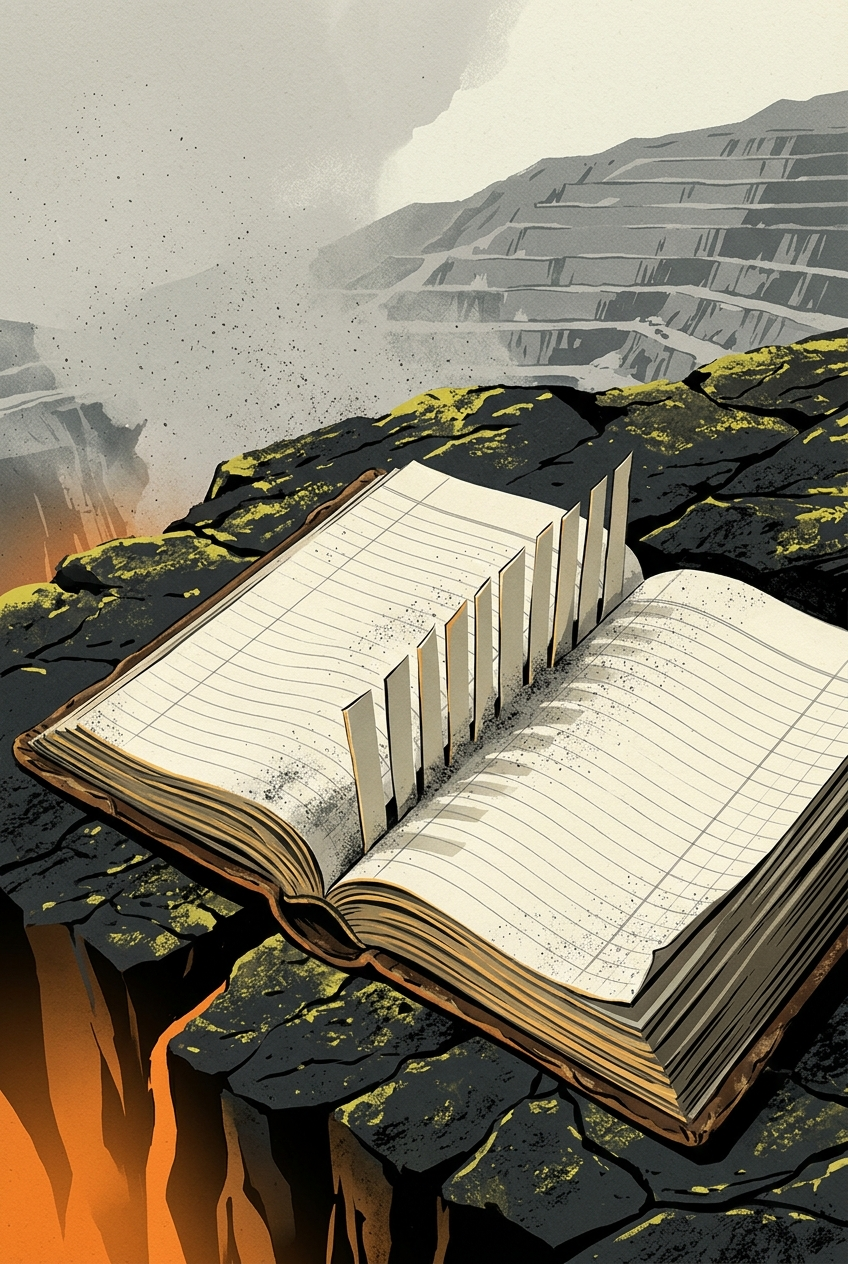
The company calls it the overplus. I know that because there is a printed line for it in the back of the tally book, past the pages for washouts and stock kills. EXCEPTIONS, ORIGINAL SURVEY: OVERPLUS. My father wrote on that line six times. This September would be my seventh, and we had both of us written the same two words every year, because they were the two words Mr. Pell taught us.
No exception.
Mr. Pell is the division auditor. He comes down from Trinidad once a year in a varnished car with a stove in it, and he reads my tally book at the Wells with his thumb going down the columns, and when he gets to the back page he does not read it at all. He turns it over and signs under my signature and puts eleven dollars in an envelope and says the company appreciates a steady hand. I was nineteen the first year and I thought eleven dollars was a strange number for appreciation. I was right about that and slow about everything else.
My mother died at Alkali Wells in 1887 of the company water, which came down the ditch from the reservoir brown and stayed brown. Nine other people died of it that summer and the company put in a settling pond in the fall. I was fourteen. I went into the yard as a call boy, because the C&W will hire a fourteen-year-old girl to wake brakemen at two in the morning and not for much else, and I got the walker's job at eighteen when the man ahead of me lost a foot under a stock car. I asked for the 212 division particularly. Pell gave it to me without looking up. I have thought about that too.
Ynez Duran died in April.
I heard it in the Wells from the woman who does the section gang's wash, who heard it from a nephew. Ninety-one years old, blind six of them, and she went in her chair with a Bible on her knees. Inside the Bible, folded into Leviticus, was a Territorial warrant for four hundred and eighty dollars that she had refused to cash for twelve years on the grounds that it was not enough and was also a lie.
I did not know her. I knew the name because it is painted on the side of a store that is under ninety feet of water.
The equinox fell on a Wednesday. I went up the line at four in the morning on the handcar and left it at 211, because you do not take iron into the overplus, that much my father told me before he told me anything else. Then I walked.
There is a place where the grade comes out of the cut and the country opens and you can see the reservoir lying flat and bad in the dark, a sheet of nothing with the Sangres standing behind it. That is 212. The milepost is a cedar board with the paint gone off the low side. I put my hand on it the way I always do.
Past it the rails ran on and the reservoir was not there.
Instead there was a bottomland with cottonwoods in it, and a road, and a bell ringing somewhere up the road, and the smell of wet ground, which in that country is the strangest smell there is. The sun was not up. The light came anyway, low and yellow and from no direction I could name, the way light comes in the hour before a storm that does not arrive.
Bellwether had a main street four hundred feet long and it was standing in front of me with the shades going up.
I want to be plain about what I felt, because I have thought about it since. I was not afraid. I had been walking that empty mile for six years expecting nothing and getting it, and a person can get greedy for the nothing, can build a life on the reliability of it. What I felt was the particular sourness of being told, after a long while, that you had been wrong in a way you could have checked.
A boy came out of a doorway with a dog behind him and looked at me the way boys look at a stranger with a tool. The dog was a yellow bitch with a bad hip. The boy was maybe nine and had his hair combed flat with water.
"You off the train?"
"Off the track," I said.
He thought about that. "Same thing."
"Not to the railroad."
He walked me up the street, because that is what a nine-year-old does, and the dog came behind us swinging her back end. I counted as I went. Twenty-six buildings, four of them brick. A schoolhouse with a wooden tower on it, and the bell in the tower going, and going wrong. I am not a musical woman. I know when a rail is cracked because it gives back a flat sound under the hammer instead of a live one, and the bell was giving back the same. Somebody was pulling the rope and getting a thud out of a thing built to ring.
"It does that now," the boy said.
"Since when?"
"Since the spring."
There was an old woman on a porch with her face turned up toward the tower. Seventy-some. Not blind. No Bible on her knees, only a pan of beans she was picking through, and the store standing behind her with her own name painted across the false front.
I got four steps past her gate before I stopped. The boy stopped too and waited. The dog sat down.
I did not say anything to her. I have gone over that a good deal since. What I had to say was that a nephew in Mora had put her in the ground in April, and that she had been right about the four hundred and eighty dollars, and there is no way to hand a woman that across a porch rail at six in the morning. So I stood at the gate with a gauge bar on my shoulder like something the county sends out, and she went on picking through her beans, and after a while I went on up the street.
"That's Mrs. Duran," the boy said. "She'll give you a peppermint if you ask her."
"I know who she is."
The section house was at the north end where it should have been, a plank building with a handcar shed and a rack of spare rail and a coffee pot going. My father was sitting on the step with his boots off, working a splinter out of his thumb with a pocketknife.
He had gotten old. That was the first thing, and it landed sideways, because he had gone into the overplus in 1886 at thirty-four and a man who steps out of the world ought to come back thirty-four. He was sixty at least. The sun had taken his eyes down to two squints in a great deal of weathering.
"Morning," he said.
"Morning."
He got the splinter and looked at it and flicked it off the blade. "Low joint at the south end of this mile."
"There's one at the north end of mine."
"Ah." He folded the knife. "Well. Same joint."
I sat down on the step. Not close. He smelled like creosote and coffee and I had not smelled that combination on a living man in eleven years and I was not going to be made a fool of by it on a step in the dark.
"You want coffee," he said. It was not a question and it was not an offer. It was the thing you say.
"No."
"Suit yourself."
We sat. He had a boot sole worn through at the ball of the foot and a fresh patch on the other one, which meant he was mending things in there, which meant time went by in there in the ordinary way. That was a piece of information I had wanted for eleven years and did not enjoy getting.
Up the road the bell thudded eleven times and quit. He waited until it had quit before he spoke again, which told me more than anything he said that morning.
"Your mother."
"Eighty-seven. The water at the Wells."
"I figured it was the water." He put the knife in his pocket. "They ran that line off the reservoir straight into the townsite without a settling pond. I told Pell about it. Pell wrote it down."
"Pell writes everything down."
"He does. It is not the same as keeping it."
I had a speech. I had been building it for eleven years, out at 212 in the dark with my hand on a cedar board, and it was a good speech, and every line of it was about him and the plat and the eleven names. Sitting there I found I could not get the first sentence out of the shed. What I said instead was:
"You've been shimming that joint six years and it is still low."
"It comes back up," he said. "Everything in here comes back up."
He went inside and came out with his tally book.
It was the same book. Same oilcloth cover, same brass corner, Cimarron & Western stamped in the middle and rubbed half off. He handed it over and sat back down and let me open it in my lap.
The daily pages were filled in his hand the whole way, clean and small, the way he wrote when I was a child and he was showing me how a column ought to look. Gauge, tie count, ballast, joints, remarks. Every page dated. All of them dated the twenty-second of September.
Eleven years of the twenty-second of September.
And at the back, on the printed line, the same two words eleven times over, and the eleventh of them written that morning before I came, the ink not properly dry.
"You keep writing it," I said.
"It is what the line says to write."
"It says EXCEPTIONS. It does not say what the exception is."
"No." He rubbed his thumb where the splinter had been. "It does not."
The light was coming up now, or the thing the light did in there. Down the street a man was rolling a barrel across a boardwalk and the sound of it went on longer than the distance should have allowed.
"Ynez Duran died in April," I said.
He did not move for a while. Then he said, "That's why the bell."
"She was the last one."
"She was the last one."
I asked him the only question I had left that was worth the trip. "What is this mile?"
And he did not tell me. He got up and went into the section house and I heard him moving a bunk, and he came out with a folded paper gone the color of weak tea and put it in my hands and sat back down and looked at the cottonwoods.
It was a page out of the right-of-way plat book, torn along the gutter, dated March of 1885. Eleven patents in a row down the left side with the section and township and the acreage: Duran, Sanchez, Tafoya, Weatherill, two Montoyas, Abeyta, Crespin, Garcia, a Lujan, a Vance. A hundred and sixty acres apiece, proved up and patented, seventeen hundred and sixty acres all told, and the condemnation price the court set at six dollars the acre and never paid because the Cabresto Land and Water Company went into receivership eight days after the decree and the warrants were drawn on a dead company.
And down at the bottom, in the certification box, in a small clean hand I have been copying my whole life:
Improvements: none. Patents abandoned. Field notes verified this date. H. Vance, Walker, C. & W. Ry.
Twenty-six buildings. Four of them brick.
"They put the main line across it," I said.
"Cheapest ground in the Territory," my father said, "once it was abandoned."
"It was not abandoned."
"No."
"You wrote that it was."
"I did."
I waited for the rest. Every man I have ever known has had a rest. He had two girls and a job and Pell in a varnished car, and all of that is true and he did not say one word of it, then or after. He knew what it would have bought him. He did not try to buy it.
What he said was: "They never paid. That is the whole of it. A mile of railroad laid across seventeen hundred and sixty acres that the company owes for. It sits out here because it has got no place in the survey to sit."
"And when the last claimant dies?"
He looked at the reservoir that was not there.
"Then there is nobody to owe it to," he said, "and it closes, and whatever is standing in it is standing in it."
I got out my own book.
I want to say that I decided something, but that is not how it went. I got out my book because I have gotten out my book at 212 every September for six years and my hands did it before I did. I turned to the back. EXCEPTIONS, ORIGINAL SURVEY: OVERPLUS, and under it the six clean copies of the two words Pell taught me, in my hand, which is my father's hand, which is the hand on the plat.
I put the pencil on the line and did not write no exception.
I wrote what a track walker writes.
I wrote the date and the mile, 212 to 213, and I chained it and wrote the chained length, which was two miles and eighteen feet, and I wrote three hundred and fifty-two rails at thirty feet, and I noted the low joint at the south end, sixth year, not shimmed. Then I copied the eleven names off the plat page with the sections and the townships and the acreage, and I wrote that the certification of March 1885 was false and that I had inspected the improvements myself and counted twenty-six, four of them brick, one schoolhouse with a bell in it.
Then I did the arithmetic, because that is what a woman finds to do out there all day.
Seventeen hundred and sixty acres at six dollars: ten thousand five hundred and sixty dollars. Twelve years at six per cent simple, which is the rate the company charges the section men against their own wages and which I have had reason to memorize: seven thousand six hundred and three dollars and twenty cents.
Eighteen thousand one hundred and sixty-three dollars and twenty cents, due from the Cimarron & Western Railway Company, this mile, this date.
I signed it. O. Vance, Walker, and my number, and I pressed hard enough to take it through to the next page, which is a thing Pell hates and which I have always done anyway.
The bell rang.
It did not thud. It came up off the tower and went out across the bottomland and hit the cut and came back, and the yellow dog sat down in the road and put her nose up, and I felt it in the rail through my boots the way you feel a train at eight miles out.
Then the water came, because the water comes at the end of that day and always has. I heard it before I saw it, a long shoulder of sound up the valley. And the town did not go under. The town went the way a lamp goes when you turn the wick down, not dark, just no longer the thing you were reading by. The cottonwoods thinned into greasewood. The street was ballast. The boy went. The dog went last and I was glad about the order of it.
And my father was standing on the ties in his stocking feet, holding his boots, sixty years old, in the middle of one ordinary mile of Cimarron & Western main line between milepost 212 and milepost 213.
He stepped down off the ballast onto the alkali and stood there testing it with his toe like a man at the edge of a creek.
"It's just ground," I said.
"I know what it is."
He sat down and put his boots on and made a poor job of the laces and I did not help him. Behind us the reservoir was where it belonged, flat and bad, going pink with the sun coming.
Pell will be at the Wells in November with his thumb and his envelope. I have thought a great deal about what he will do when he turns that page over, and I have gotten no further than knowing that he will have to do something, because it is written in the company's own book in the company's own inspector's hand, and a thing written in the book is on the company, and eleven dollars does not get it out. Ynez Duran's warrant is still in Leviticus at a nephew's house in Mora. Four hundred and eighty dollars, which was not enough, and was also a lie.
I chained the mile again on the way down. One mile and six inches, which is within tolerance and which I wrote up anyway.
My father walked out ahead of me toward 211 and the handcar, going slow on ground that had not asked anything of him in eleven years, and after a while he started counting ties out loud. He got it wrong twice. Both times I said nothing, and both times he started over on his own.
More from Short Stories