Bells for the Far Shore
I have kept the carillon in the Ashe Mill tower for forty-one years, and in all that time the bells had never once rung without me.
Synopsis
Beatrice "Bea" Corliss has kept the carillon in the Ashe Mill tower for forty-one years, and its bells have never once rung without her, so when they wake her at exactly 3:47 a.m. playing seven halting notes, she is less frightened than insulted. Both keys hang on their nail and the door is untouched, yet whoever rang knew to avoid the one cracked bell, which means they were taught in her tower. Chasing the impossibility past a deputy who wants to dust for fingerprints and a salesman itching to replace her living instrument with an automated system, Bea realizes the ringer isn't aiming the bells at the sleeping town but across the misty valley to the one lit window on the far shore, at the precise hour the wind stills and sound carries. The seven notes are the unfinished practice canon written by Odile Rousseau, the woman who taught Bea everything and now lies in a care home with dementia, and the culprit is Odile's teenage great-granddaughter, Wren, who discovered that the tune, carried from its home tower at that quiet hour, briefly calls her great-grandmother back to herself. Instead of turning Wren in, Bea takes her on as a student, and together they finally finish the seventy-year-old melody and play it, four hands, out over the water toward the far shore.
Bells for the Far Shore
Story
I have kept the carillon in the Ashe Mill tower for forty-one years, and in all that time the bells had never once rung without me. So when they woke me at a quarter to four on a Tuesday in October, I did the only sensible thing a woman of sixty-eight can do at that hour. I lay in the dark and decided I was dreaming.
Then they rang again.
Seven notes. That was the first strange thing, that I could count them, because a carillon does not usually offer itself up to be counted. It pours. But this was seven notes played slowly, one at a time, by someone reaching for each as if it were the last apple on a high branch. G, and then a wait, and then A, and a longer wait, and then the little stumble down to E where the player's hand plainly slipped, because the E came twice before it went on.
My cat, Sostenuto, lifted his head off my feet and looked at me as though I had done it.
"It isn't me, Nuto," I said. "I'm here."
I got up. I am not built for stealth anymore, and the floor of my house is honest about my weight, but I went to the window and pushed the curtain aside and looked up the hill at my tower. The mill has been dark for sixty years, a great brick carcass with ferns growing in its gutters, but the bell chamber above the old clock face was catching the moon, and I stood there in my nightgown watching my own bells ring a tune I half knew and could not place, played by a hand that did not know it at all.
At the seventh note the player stopped. Not finished. Stopped, the way you stop when you've run out of the part you've memorized. The valley went back to its ordinary sounds, the river and the wind and a dog three farms over, and I stood at the glass a long while, cold to the knees, and here is the thing I want you to understand before I tell you the rest. I was not frightened.
I was insulted.
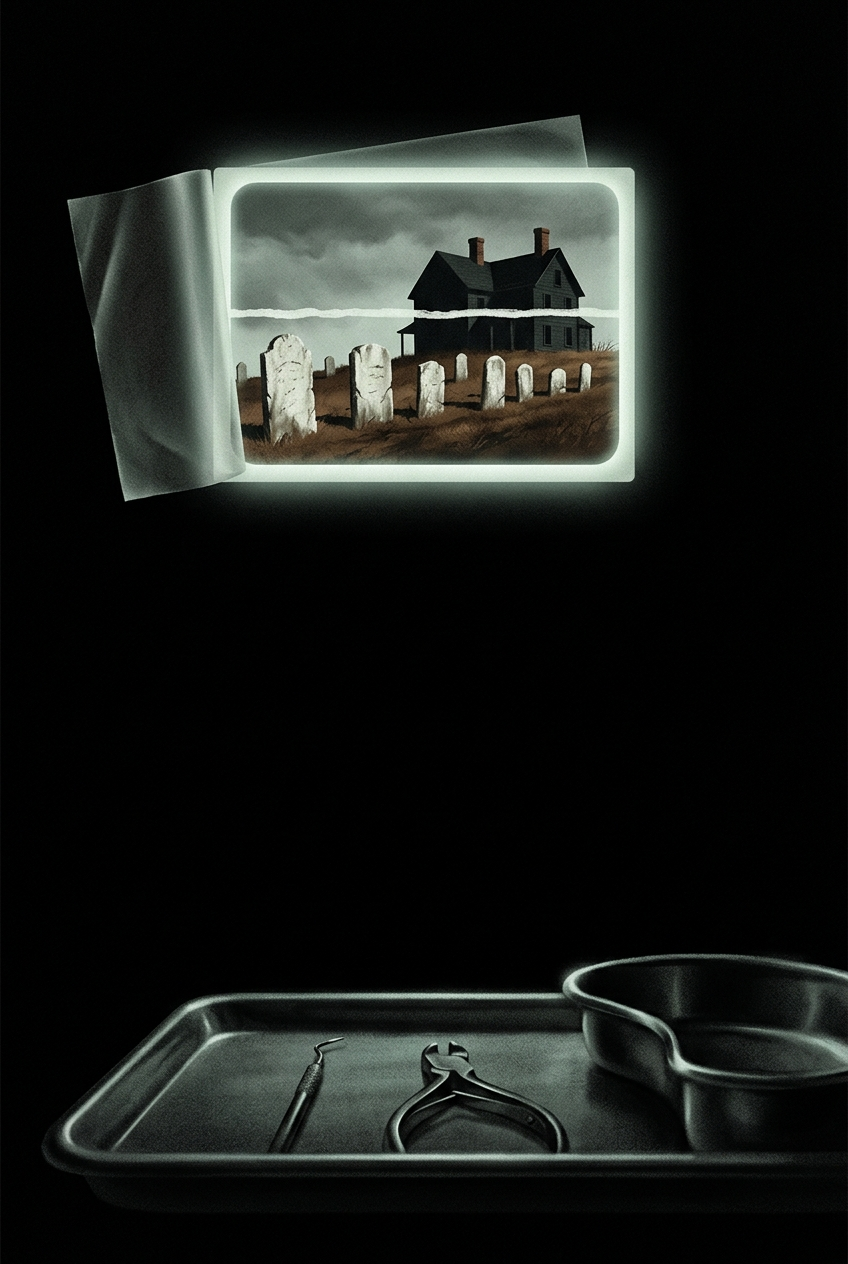
The tower has one door and I have its only key. I have carried it so long that the tooth of it has worn a pale groove in the leather of my coin purse. There is a second lock at the top of the ladder stair, to the clavier room, and I have that key too, on the same ring, and the ring lives on a nail beside my stove where I can see it while the kettle heats. It was on its nail. I checked before I went back to bed, and again when I couldn't sleep, and a third time near dawn, and each time it hung there being a key, refusing to explain itself.
By eight I had walked up the hill.
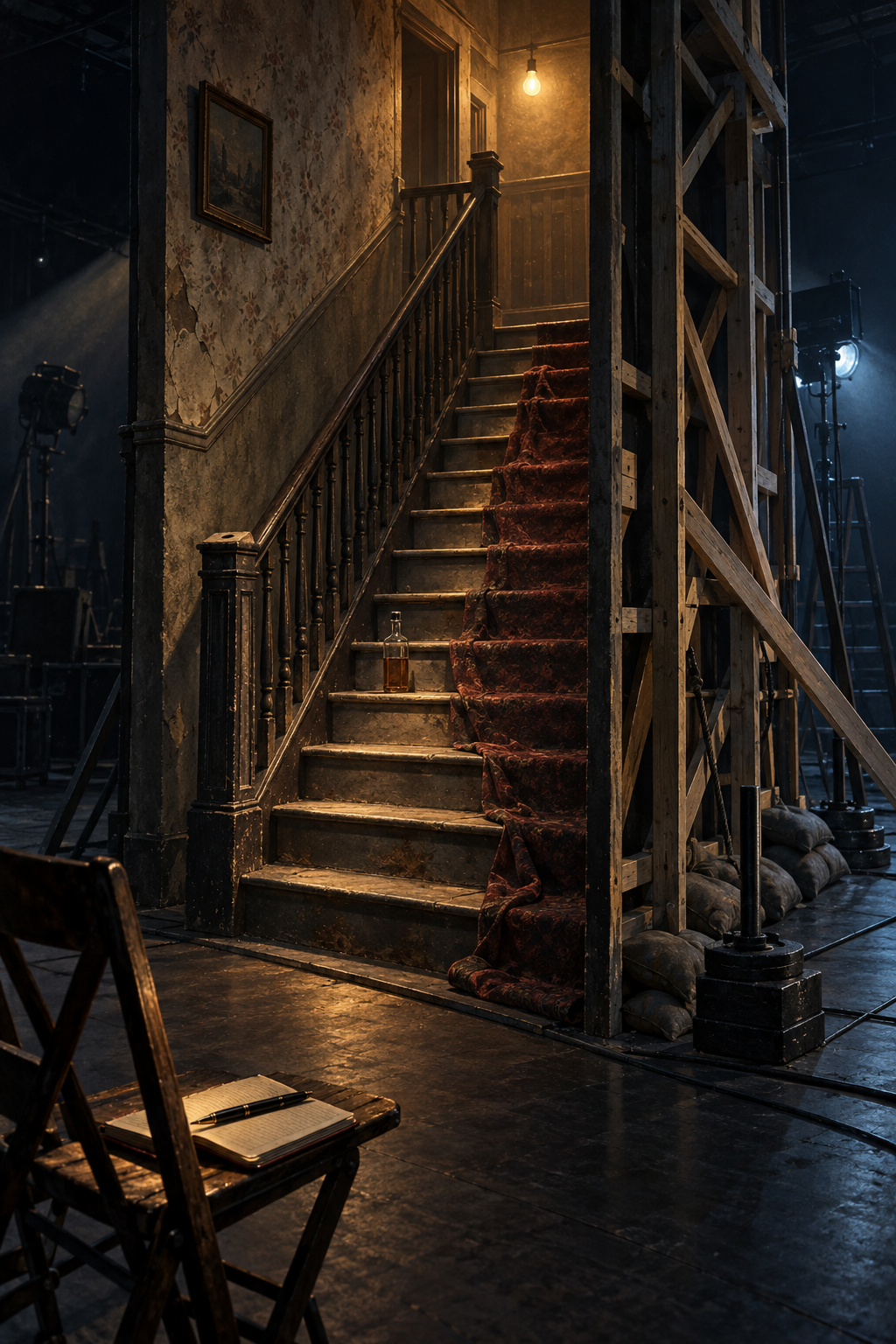
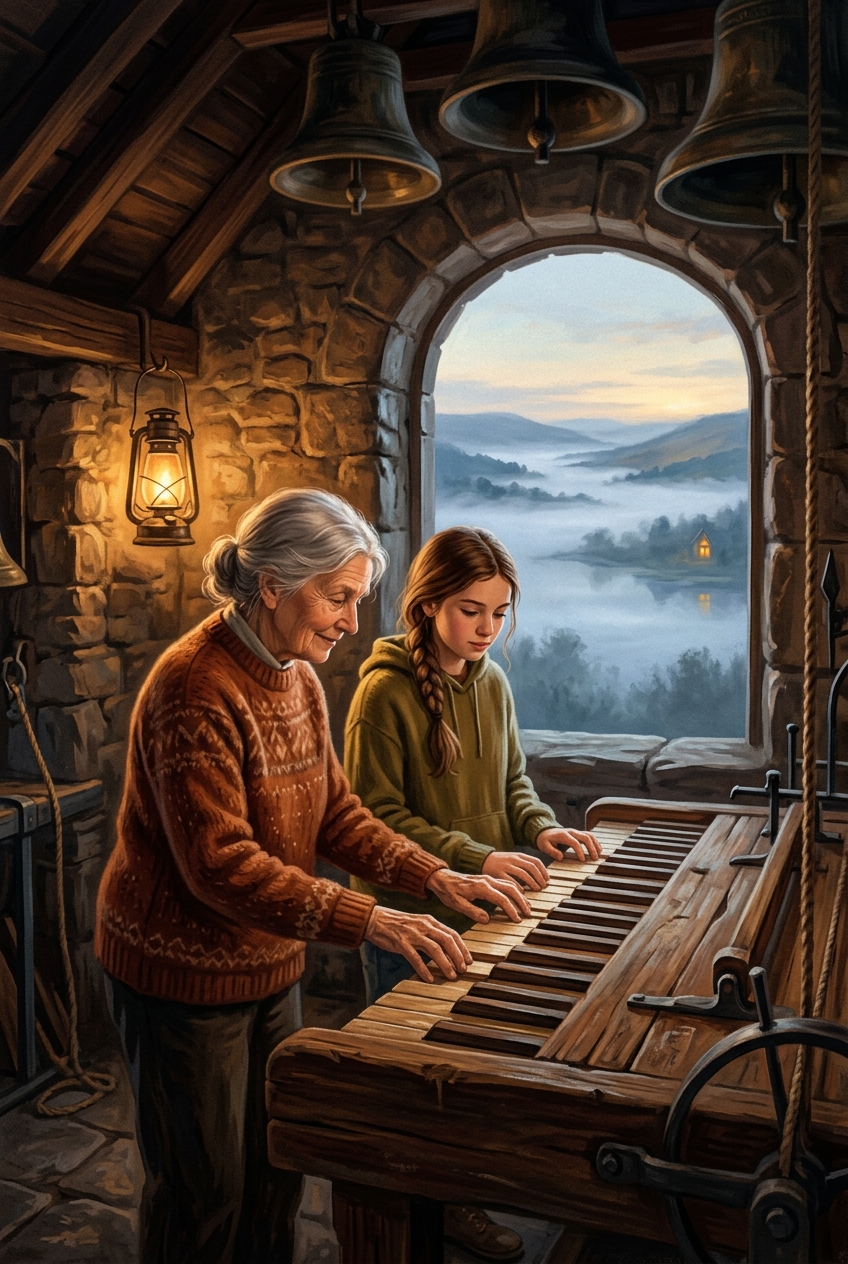
The door was locked. The stair door above was locked. The clavier sat under its cloth exactly as I leave it, the great wooden baton keys ranked like something between a loom and a butter churn, which is fitting, since a carillon is half instrument and half farm machinery and you play it more with your fists than your fingers. Nothing was disturbed. Nothing was gone.
Except that the cloth was folded back on the left side, and I do not fold it that way. I fold from the right, always, because the right side of the keyboard is the treble, and the treble is where the trouble lives, and I like to see the trouble first.
I stood there for a moment feeling the two facts refuse to fit. No forced door. A folded cloth.
Then I noticed the third fact, the one that changed the shape of the whole business, and I only noticed it because I have spent my life listening to this instrument the way a mother listens to a house full of children and can tell you which one has stopped breathing. Whoever played last night had played G, A, C, down to E, back up, and out. Seven notes across the middle of the compass.
And not once had they touched the fourth bell.
The fourth bell is a B-flat that cracked in the winter of 1994, a hairline you can't see and can barely hear, but I hear it, a sourness under the tone like a wasp in the jam. I have kept that key roped off in my own mind for thirty years. I never strike it. No one who has been taught in this tower ever strikes it, because I have made every one of them swear off it the way you'd make a child swear off a hot stove.
The person who rang my bells at 3:47 in the morning had known to avoid the cracked bell.
Which meant they were not a burglar, and not a vandal, and not a ghost, none of whom would have known or cared. It meant they had been taught. And I have taught, in forty-one years, a great many people, and I could name every living one of them, and not a single one had reason to climb my tower in the dark and play seven notes badly and go home.
I went down the stair more slowly than I came up.
Deputy Pruett is a serious young man with a serious young mustache, and he wanted very much to dust the clavier for fingerprints. I let him, because it made him happy and it did no harm, and because I had learned by then that I would get more out of him if he felt useful than if he felt managed.
"No sign of forced entry," he said, writing it down as though I hadn't already told him twice.
"None."
"So they had a key."
"There are two keys, Deputy, and both of them slept beside my stove."
He tapped his pen against his notebook. "Miss Corliss, I have to ask. Is it possible somebody made a copy? Somewhere along the line. Forty years is a long time to keep track of a key."
I opened my mouth to tell him it was not possible, and then I closed it, because I am old enough to know the sound of my own pride and that was the sound it makes. Forty years is a long time. Keys get lent. Locksmiths get paid. And there had been a time, before I held this post, when the key had belonged to someone else.
"Ask your questions," I said. "I'll think about mine."
He asked them. Had I noticed anyone hanging about the tower. Had there been trouble with anyone in town. And here he grew delicate, the way people do when they're about to be indelicate, and mentioned that there had been talk at the council, hadn't there, about the Veritone system, about modernizing, and that feelings had run warm on both sides.
Feelings had run warm. That was one way to put it.
Gideon Frame sells automated carillons the way some men sell insurance, which is to say by making you feel that the thing you love is a liability you haven't properly grieved yet. He had come to the council in August with a laptop and a speaker the size of a hatbox, and he had played us a recording of the Ashe Mill bells, our bells, sampled and cleaned and set to ring on a schedule from a box in a closet, no ringer required, no ladder to climb, no arthritic sixty-eight-year-old to eventually, and he did us the courtesy of not saying this part, die.
"The beauty of it," he'd said, "is reliability. It rings whether anyone shows up or not."
I had said, from the back, that this was not a beauty, it was the whole of the problem, and a few people had laughed, and Gideon had smiled at me the way you smile at weather.
Now I sat in my kitchen with my tea going cold and thought about Gideon Frame. A tower that rang at four in the morning with no one inside it was a tower that could not be trusted. A carillon that let strangers in was a carillon that wanted replacing. If a man had wanted to prove that the old way was unsafe, that the old woman had lost her grip on her own instrument, he could hardly have written himself a better advertisement than seven notes in the dark.
It was a good theory. It had a villain and a motive and it let me be righteous, which is my favorite way to be. I held onto it for exactly as long as it took the bells to ring again.
The second night I was ready. I sat in the dark of my front room with a blanket and a thermos and Sostenuto affronted on my lap, and I watched the tower, and at 3:47 by my mother's mantel clock the bell chamber woke.
Not 3:45. Not 4:00. Forty-seven minutes past three, the second night as exactly as the first, and I sat forward so quickly that the cat left in a temper.
A man proving a point would ring at midnight, when the town was awake to be alarmed. He would ring long and loud and often. He would want witnesses. This ringer wanted the opposite. This ringer wanted the one hour when Loomis is so deeply asleep that a sound can cross it unremarked, and I knew that hour, I have always known it, because 3:47 in October is when the wind that runs down our valley all night pauses and turns, when the river seems to draw one long breath before dawn, and for about twenty minutes the air over the water goes still and flat and carries sound the way a whisper carries across a pond.
Whoever was in my tower was not aiming those bells at Loomis.
They were aiming them at the far shore.
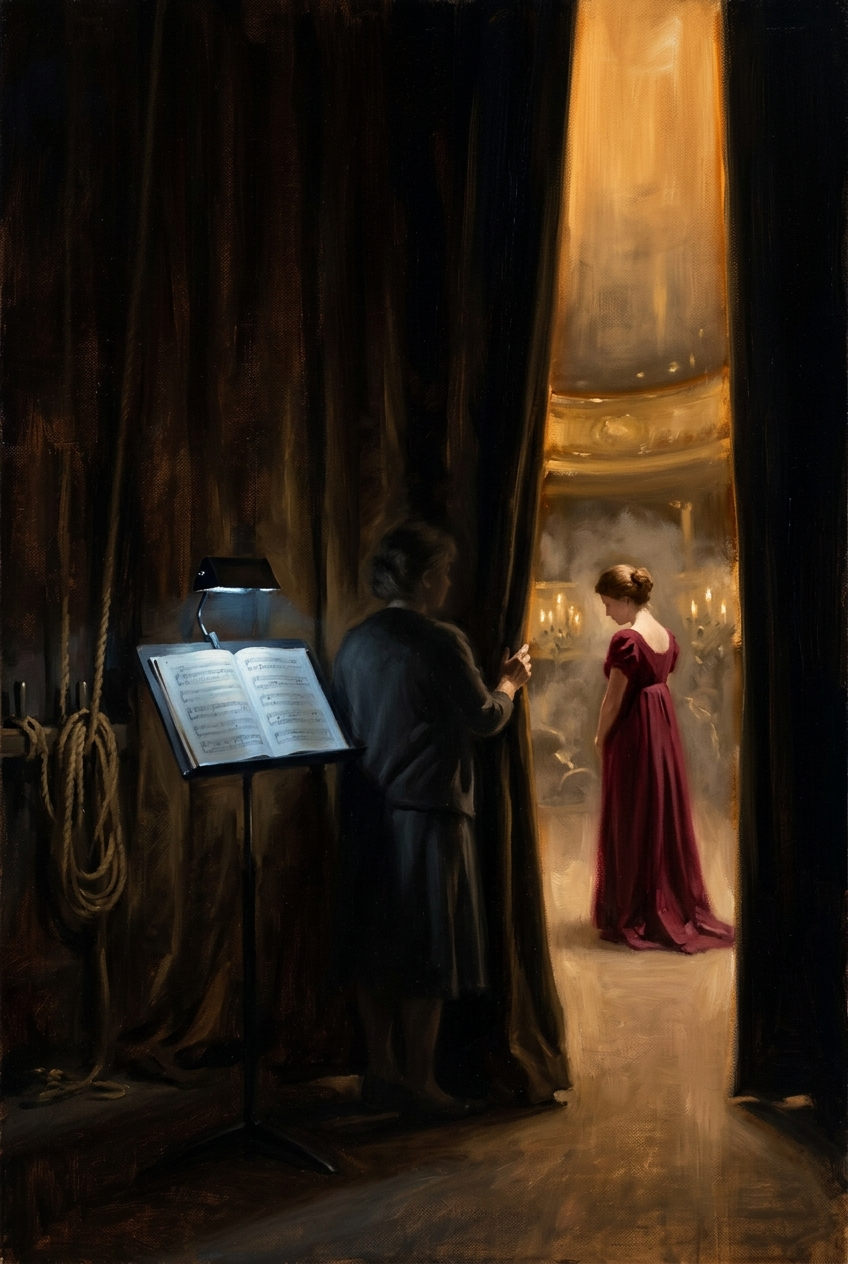
I turned in my blanket and looked across the black valley to where the land climbs again on the other side of the river, and there, halfway up, was the one set of windows in the county still lit at that hour, warm and yellow and patient. Halden House. Where they keep the people who can no longer keep themselves, and where, in a room I had visited eleven times that year and been recognized in perhaps four, lived the woman who taught me every note I know.
The seven notes came across the water, slow and wrong and reaching, and I finally heard what they were.
They were the vespers. Odile's little vespers, the practice canon she set in front of every child who ever sat at her clavier, the first real thing any of us played. G, A, C, back to E, and up, and out, seven notes she wrote herself when she was young and never bothered to finish, because it was only a beginning, she said, it was only ever meant to teach a hand to fall. I had played it ten thousand times. I had not thought of it in years. And someone was standing in my tower in the dark playing it badly, over and over, toward the one lit window on the far shore, and I understood then that I was not solving a crime.
I was overhearing a conversation.
I did not tell Deputy Pruett. I telephoned Halden House.
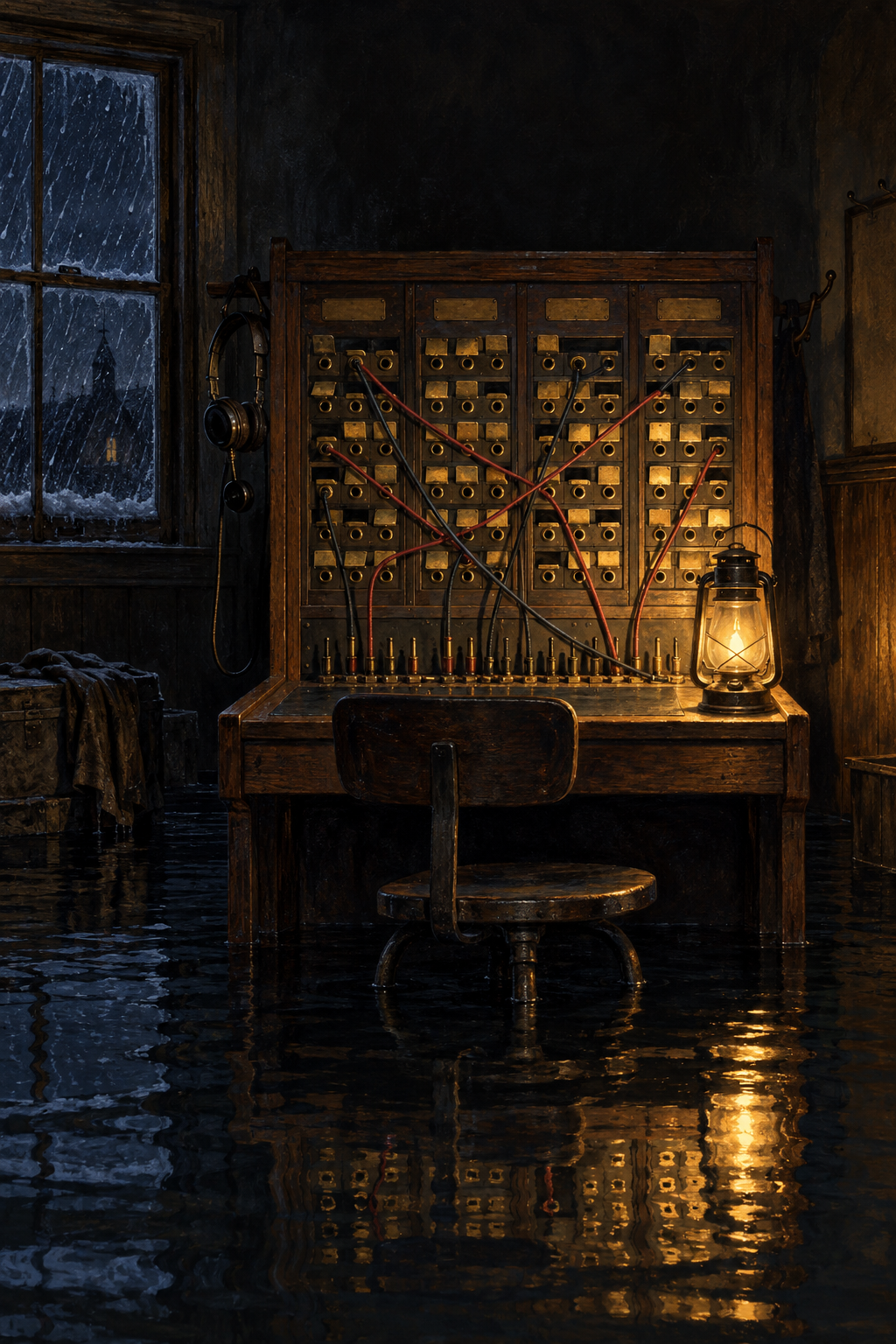
The night nurse was a kind woman named Cora who was used to strange calls and made no fuss over mine. Yes, she said, Mrs. Rousseau was settled. No, no trouble. And then, because I asked the right question in the right slow way, she told me the thing that turned the last of the lock.
"She does sing, some nights," Cora said. "Mrs. Rousseau. Round about four, if she wakes. Doesn't speak, you understand, hasn't in months, doesn't know her own daughter half the time, God love her. But some nights around four she'll hum a little thing, same little thing, and settle right back down. The girls all know it. We call it her lullaby." Cora laughed softly. "Funny you should ask. Her great-granddaughter asked me the very same, back in the spring. Sweet girl. Wanted to know did her nana ever seem to hear things, from outside."
"Her great-granddaughter," I said.
"Wren. Comes most Sundays. Sits and reads to her. Doesn't say much, that one, but she's the only face old Mrs. Rousseau lights up for anymore." Cora's voice warmed. "Isn't it something, what stays."
I thanked her and set the telephone down and sat in the dark a while longer.
Wren Rousseau. I had a dim picture of her from a church basement two Easters ago, a narrow, watchful child at the edge of the coffee hour, thirteen or so, the kind of quiet that isn't shyness but attention. Odile's own granddaughter's girl. And Odile, before the fog took her, had held this post for thirty years before me, had climbed this stair before my knees were even born, and had carried, all that time, a key.
A key that, when she retired and handed me the post, she had not been asked to return, because I was young and it did not seem to matter, and because you do not ask your teacher for her key. You would sooner ask her for her hands.
It had been in a drawer somewhere for forty years. And a quiet, watchful girl who read to her great-grandmother on Sundays, and who wanted to know whether the old woman could still hear things from outside, had found it.
I could have caught her the next night with the deputy and his flashlight and been proven right in front of witnesses, which, as I've told you, is my favorite thing to be. Instead I climbed my own tower at three in the morning, which at my age is its own small act of faith, and I sat down on the top step of the clavier room in the dark and I waited.
She came up the stair like a cat, all silence and certainty, and she was three feet from me and reaching for the cloth before she felt me there. I heard the breath go out of her. To her great credit she did not scream. She went very still, the way a rabbit does, betting everything on not being seen.
"You fold it from the left," I said. "I fold it from the right. That's how I knew you weren't me."
A long silence. Then, in a small flat voice that was doing a great deal of work to hold steady: "Are you going to call the police."
"That depends entirely on how you answer my next question." I did not turn on the light. It seemed a conversation better had in the dark. "The B-flat. The fourth bell. You never strike it. How do you know not to?"
I felt her turn toward me in the black. "It's cracked," she said, as if it were obvious. "Nana told me. Before. She said the fourth one has a bee in it and you have to just let it sleep." A pause. "I didn't think she'd remember she told me that. She doesn't remember I bring her tea. But she told me about the bee."
And there it was, the whole of it, in a child's voice in the dark, and I found I had to wait a moment before I could trust my own.
"Sit down, Wren," I said. "You're making my knees nervous, both of us standing on a ladder. Sit down and tell me about your nana."
She sat. And slowly, in pieces, with the particular carefulness of a child who has been keeping a large thing alone, she told me.
She had noticed it in the spring, she said. She'd been at Halden late, past visiting hours, because her mother was arguing with the front desk about something, and she'd been sitting with Nana when the town clock struck four somewhere far off, just the hour, just the low bell, and the old woman who hadn't spoken in weeks had opened her eyes and hummed. Seven notes. And then slept, easy, like a child. And Wren had gone home and not slept at all, thinking about it.
"Everybody kept telling me she's gone," Wren said. "Like, the person's gone and the body's just, running down. And I believed them, kind of. But she wasn't gone when she hummed. She was right there. For a second she was right there and she knew where she was, I could tell." Her voice thinned. "I looked it up. What she hums. It took me forever. And then I found out it's a bell thing, it's for these bells, and I found the key in her old sewing box, and I thought, if I could just play it for her. From here. Where it's supposed to come from. Maybe she'd be right there for longer."
"So you taught yourself. In the dark. Seven notes."
"I could only get seven," she admitted, miserable. "There's more but I can't figure out the more. It doesn't finish."
"No," I said. "It doesn't. It never has."
And I told her, because she had earned it, that the vespers had no ending because her great-grandmother had written only a beginning, seventy years ago, as a girl younger than Wren was now, and had meant it only to teach a hand to fall and had never gone back to give it an end, and that I, who had promised for four decades to finish it for her and never had, was possibly the last living person who could.
We sat with that for a while, the two of us, on the cold top step of my tower, in the hour when the valley holds its breath.
"It carries," Wren said finally, softly, almost to herself. "At exactly this time. I don't know why. It only carries at exactly this time."
"I know why," I said. "I'll show you. But not tonight. Tonight your mother thinks you're in bed, and I think I'm too old for this ladder, and both of us are about to be proven right." I got up, joint by joint, and put out my hand in the dark until I found her shoulder. "Sunday. Come Sunday, in daylight, through the front door, like a person. And bring nothing but your hands."
I did not tell the council the truth, exactly. I told them the tower had been entered by a party known to me, that no harm had been done, that the matter was resolved, and that I would be adjusting my security, by which I meant I would be having a second key cut on purpose this time. Gideon Frame was disappointed, I think, though he was too smooth to show it. His argument had rung at 3:47 for two nights and then it had gone quiet, and a quiet argument is a losing one. Deputy Pruett got to write case closed in his notebook, which pleased him nearly as much as fingerprints would have.
What I did tell them, all of them, at the November meeting, was that I intended to take on a student. That the post would not die when I did, because I did not intend to let it. That was carried by voice vote, and only Gideon abstained, and I have never in my life so enjoyed the abstention of a man.
Wren comes Tuesdays and Sundays now. She has a hand that wants to rush and an ear that never lies, which is exactly backwards from most, and exactly the harder half to teach, and I would not trade her for six obedient children with metronomes for hearts. We finished the vespers in December. Or rather she finished it and I only argued, because when a beginning has waited seventy years for its ending, the ending had better come from a young hand that still believes the branch is worth reaching for. We gave it a close that turns, at the last, back up to the G it started from, so that it can begin again, which Odile, I think, would have called cheating, and would have kept.
We played it for her at Christmas. Not from her room. From the tower, both of us, four hands on the baton keys, at 3:47 in the morning with the wind turning down the valley and the river drawing its breath, out across the still flat air to the one lit window on the far shore.
I don't know for certain that she heard the whole of it. Cora telephoned the next morning to say that Mrs. Rousseau had woken near four and hummed her little lullaby, longer than usual, all the way to the end this time, a part the girls had never heard before, and had smiled, and slept.
Wren keeps the second key on a nail beside her own bed now, where she can see it. She says it helps her sleep, knowing it's there. I've told her that's foolishness, that a key is only a key.
I have never in my life told a larger lie, and she knows it, and neither of us has ever felt the need to say so out loud.
More from Short Stories