Names for the Frost
Aldous Renn kept the book wrapped in oilcloth on the mantel, where the fire could dry it but never reach it. Marren had not held it in eleven years.
Synopsis
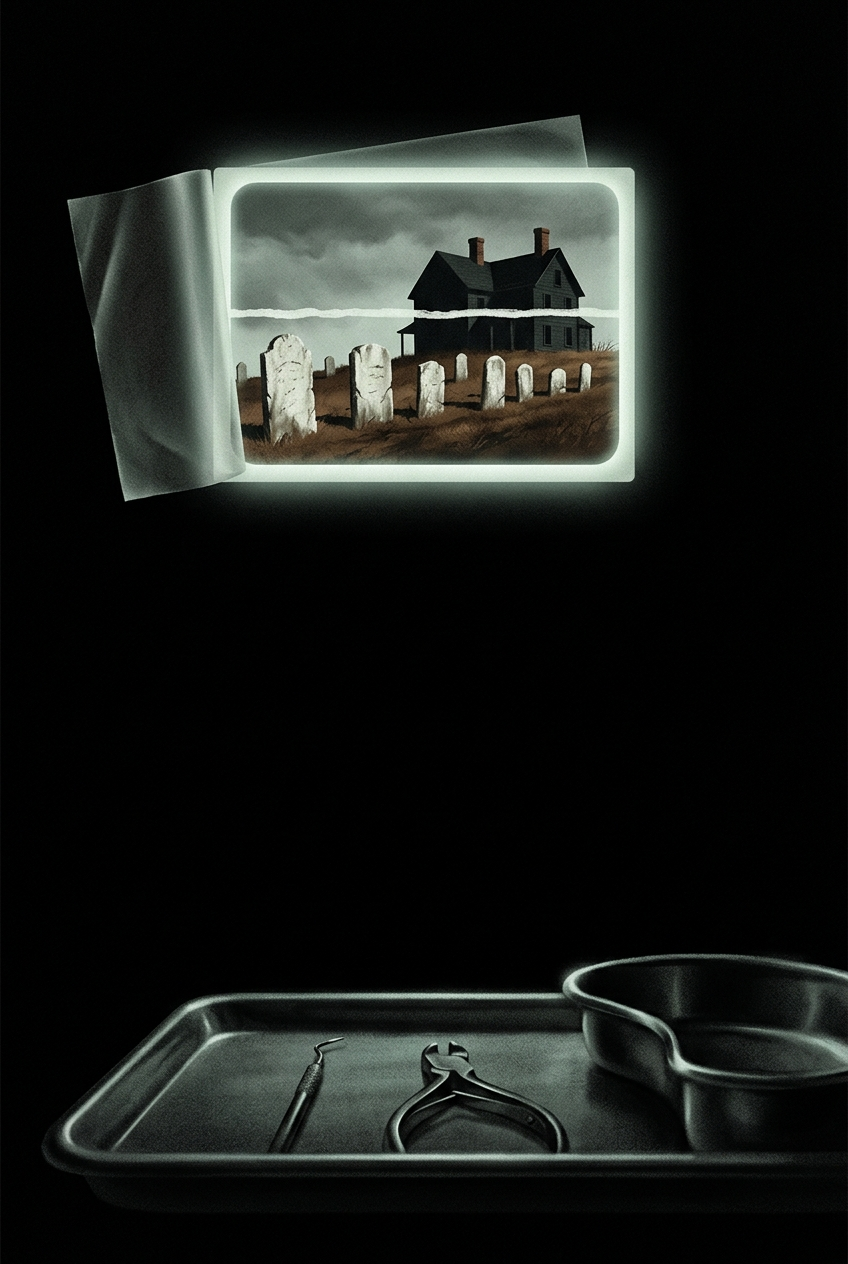
Every year on the last night before the hard frost, one of the Renn family walks the boundary of the far field and recites the names of the four hundred plague dead buried beneath it, because a remembered dead lies quiet and a name left unsaid rises to demand a living one in its place. Summoned home to inherit the duty from her dying grandfather Aldous, Marren finds a name violently scratched out of the book of the dead: Iris, her mother, whom she was always told simply left. The truth is worse: years ago Iris gave her own name to a risen child to spare the village, vanishing from every memory but the ledger's, and Aldous's grief-blinded pen sealed a second name in the dark beneath hers, a four-year-old who has walked a little closer to the wall every autumn since. Alone on the frost-bound night, Marren refuses the old bargain of trading a living name for the dead one, lays the child to rest by remembrance, and speaks her mother's scratched name back into the cold air, reclaiming Iris not as a living woman but as a grief she is finally allowed to carry.
Names for the Frost
Story
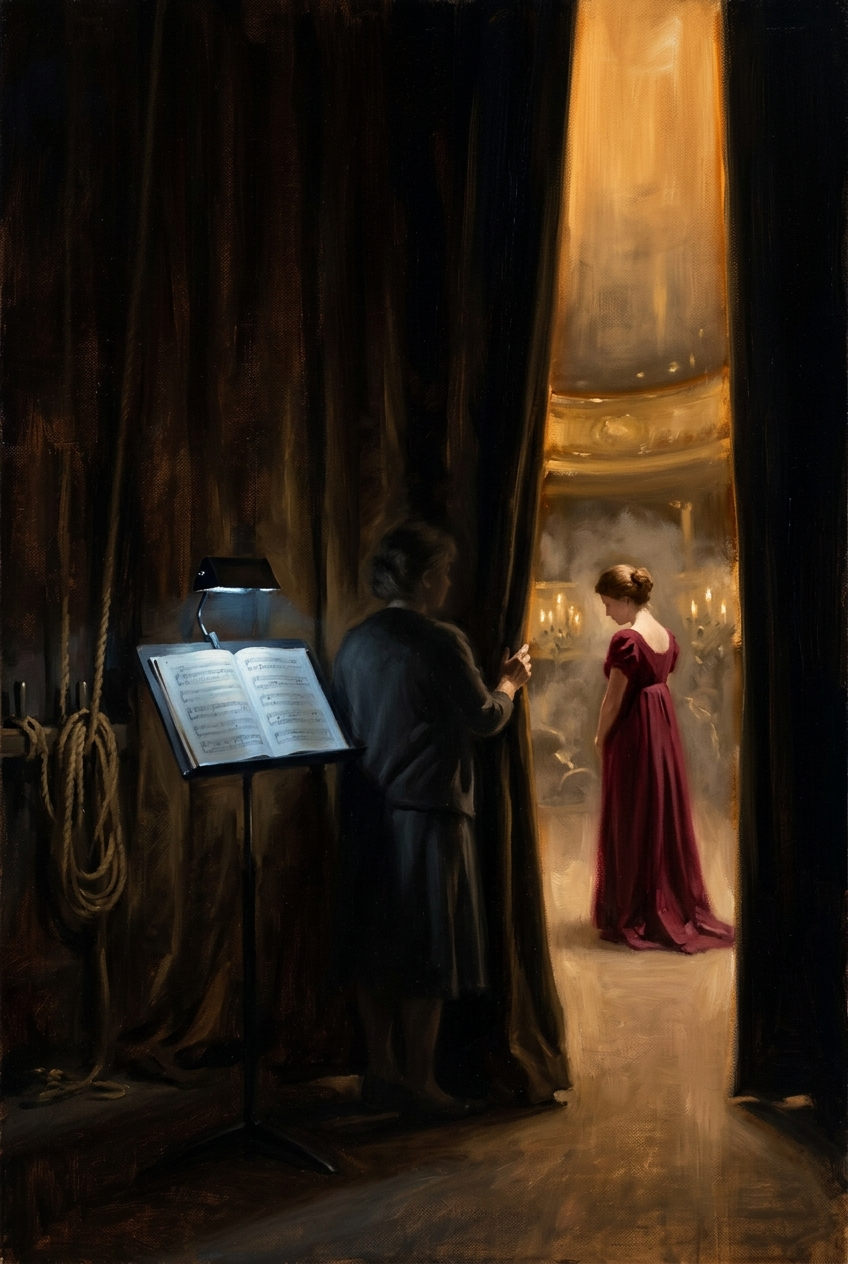
Aldous Renn kept the book wrapped in oilcloth on the mantel, where the fire could dry it but never reach it. Marren had not held it in eleven years. When she lifted it down the weight surprised her, the way a coffin surprises the men who lift it: heavier at one end, and heavier than a thing that size has any business being.
"Under the boards, not by the spine," her grandfather said from the bed. His voice had worn down to paper. "It's older than the house. It doesn't forgive being dropped."
She sat on the stool beside him and laid the ledger across her knees. Rain came over the roof in long combed strokes. Past the yard and the wall and the black stubble of the near field, the far field lay under its first frost, and beyond it the treeline stood the way it always stood, without moving, darker than the dark it was cut against.
"You shouldn't have come," Aldous said. He didn't mean it. He'd written her four times before she came, each letter shorter, the last one only her name and the word soon.
"You're glad I did."
"I'm glad and I'm sorry. Out here they turn out to be the one thing." He worked a hand loose from the blanket and set it on the oilcloth, not opening it, just resting there as if to keep it shut. "You remember what it is."
"A book of the dead."
"A book of names." The correction was old in him. "The dead is only what you get if you tell it wrong."
She had grown up on the shape of the thing without ever being given the meaning. Every year, the last night before the hard frost, her grandfather put on his coat and took a lantern and the book and walked the boundary of the far field, and he read. All night, or near enough. As a girl she had watched from her window, the little light going along the wall and stopping, going and stopping, and his voice coming back to her in the pieces the wind allowed her, a name, a name, a name. In the morning he slept till noon and woke with a throat like a dry road and ate everything the house had.
"It's a burying ground," he said now. "Plague dead, most of them, from before the church would take such. Four hundred and more, put in without stones because there was no time to cut stones and no coin to buy them. My great-grandfather's grandfather started the telling. You say every name on the book, once, aloud, on the night. You say it so they know they're kept. A kept dead lies quiet." He wet his lips. "That is the whole of it, and it is harder than it sounds."
"And a name you miss?"
He was still long enough that she thought sleep had taken him. Then: "A name gone unsaid a full year forgets it was ever dead. It stands up under the ground and it climbs out, and it comes to the edge of the trees, and it waits. It wants what the forgotten always want. It wants a name." His eyes found her. "It doesn't care whose."
"You give it one off the book."
"Off the book they're spoken for already. No." His hand closed on the cloth. "You give it a living one."
She waited for him to smile, the way he'd once told her the well kept a woman in it, and that the good scissors would cut a lie in two if you spoke over your work. He didn't smile.
"A person," she said. "A person alive."
"You say the name to the risen thing and you walk away and you don't look back. By morning that one's gone. Not dead. Gone the way a word goes when it slips you and won't come back, off every tongue, out of every book, out of the place they stood in the picture. The chair still there. Nobody to sit in it, and nobody left to see the sitting's stopped." He shut his eyes. "It has been done twice in all the telling. Both before my time, both a stranger off the road, and God keep whoever chose them. You pray it never comes to you. You tell it careful so it never has to."
He slept then, all at once, his breath catching and letting go, catching and letting go. Marren sat with the book on her knees and did the thing she had driven three hundred miles telling herself she would not do. She opened it.
The names ran down in a dozen hands, some the same hand aging across the pages, the ink going from black to the brown of dried blood. Renn under Renn had carried it. Coll, Ferry, Ashe, Wyeth. Old Nan Tunny, and bracketed under her the six Tunny children a bad fortnight had taken, a whole family held in a stranger's pen four hundred years after the stranger's own hand was dust. Marren read without meaning to. You cannot not read a name.
On the fourth page from the last, low in the column, a name had been scratched out.
Not struck through. Scratched, the nib worked back and forth until it tore a small window in the leaf, until whatever had stood there was only a black wound in the line of clean names above and below. Someone had wanted this one gone and had not been able to let it simply fade. They had needed to kill it with the pen.
She tilted the page to the fire. The scratching had bitten deep enough to press the shapes of the letters into the leaf beneath, a ghost pushed through to the far side. She read it with her fingertip more than her eye, the way you read a coin through paper.
Iris.
Her mother's name.
Her mother, who had left when Marren was too small to keep any part of her. Her mother, of whom the house held not one photograph, not one dress, not a hairbrush, because a woman who leaves takes those things or has them burned. That was the shape of the story she had been raised inside. Iris left. Aldous raised the child. The village, when she was young, had looked at her with a softness she'd taken for pity and had never once said her mother's name, and she had thought that a kindness.
She looked at the scratched-out place, and just beneath it, where the tear had lifted a curl of the leaf, another name lay half-swallowed, pressed into hiding by the same rage that had ruined the first. She could make out only the tail of it. She could not read it whole. The torn curl had dried against the page below and sealed the two leaves together like a lip.
When Aldous woke, the rain had stopped and the light in the window had gone the grey of a coming frost.
"Whose name did you take out," she said. She had meant to be gentle. It came out flat as the field.
He looked at the book open on her knees and something went out of his face, some last small guard he'd kept up eleven years.
"Put it away," he said.
"Whose."
"Marren."
"It's my mother's name," she said. "Iris. I felt it through the page. She's in the book of the dead. She didn't leave. You told me she left."
For a while there was only the fire and his breathing. Then he told her, the way a man tells a thing he has carried so long the carrying has become the shape of his hands.
Iris had been the teller after him, or would have been. He'd been training her the year his own father died, mid-summer, sudden, the old man face-down in the near field with the scythe still in his fist. A death out of season throws a household into a fog. Somewhere in that fog a page of the book went unsaid. Not skipped on the night. Sealed, a leaf stuck to a leaf with the damp, turned as one, so that a whole side of names passed under the lantern unread and no one the wiser.
"A child," Aldous said. "It was a child that rose. They're the worst of them, the small ones. They don't understand what's happened. They only know they've been left." He was looking at the wall. "She came to the wall the third autumn. No taller than the stones. Iris saw her first. And the book wanted a name, a living name, and I stood there with my mouth full of every name in the village, every neighbor, every one of ours I could give up to save the rest, and I could not make my throat do it. I could not."
"So she gave her own," Marren said.
"She walked out to the trees ahead of me. I didn't understand what she meant to do until she'd done it. She said her name to the child at the wall. Iris. And the little thing took it and lay down, and your mother." His voice did a thing then that she had never heard it do. "By the time I reached the spot there was no one there but me. And a baby crying in the house behind us, and me not able, for the life of me, to think whose."
The book had kept the name. That was the cruelty of it, he said. The world let Iris go clean, out of every mouth and every memory, but the field's own book would not give up a name that had been given to the field. Her name sat in it among the dead, and every year after he was meant to read it out with the rest, his daughter's name in his own mouth among four hundred strangers, and after the first year he could not. He had taken the pen to it. He had told himself he was only sparing them both. He had not known, or had not let himself know, that the same fury had sealed the leaf beneath, and shut a plague child's name in the dark, and started, all over again, the slow patient thing a field does when it is owed.
"It's been coming eleven years," he said. "I see it every autumn at the treeline, a little nearer than the last. This year it will reach the wall. And I can't walk out to it." He looked at his own hands as though they belonged to someone he'd outlived. "I brought you here to tell you not to do what your mother did. Give it a stranger's name, if a stranger can be found. Give it mine. I'm going regardless, and I'd rather go paying a debt than in this bed. Promise me you won't give it yours."
"I won't promise that," Marren said, and stood, and wrapped the book back in its cloth.
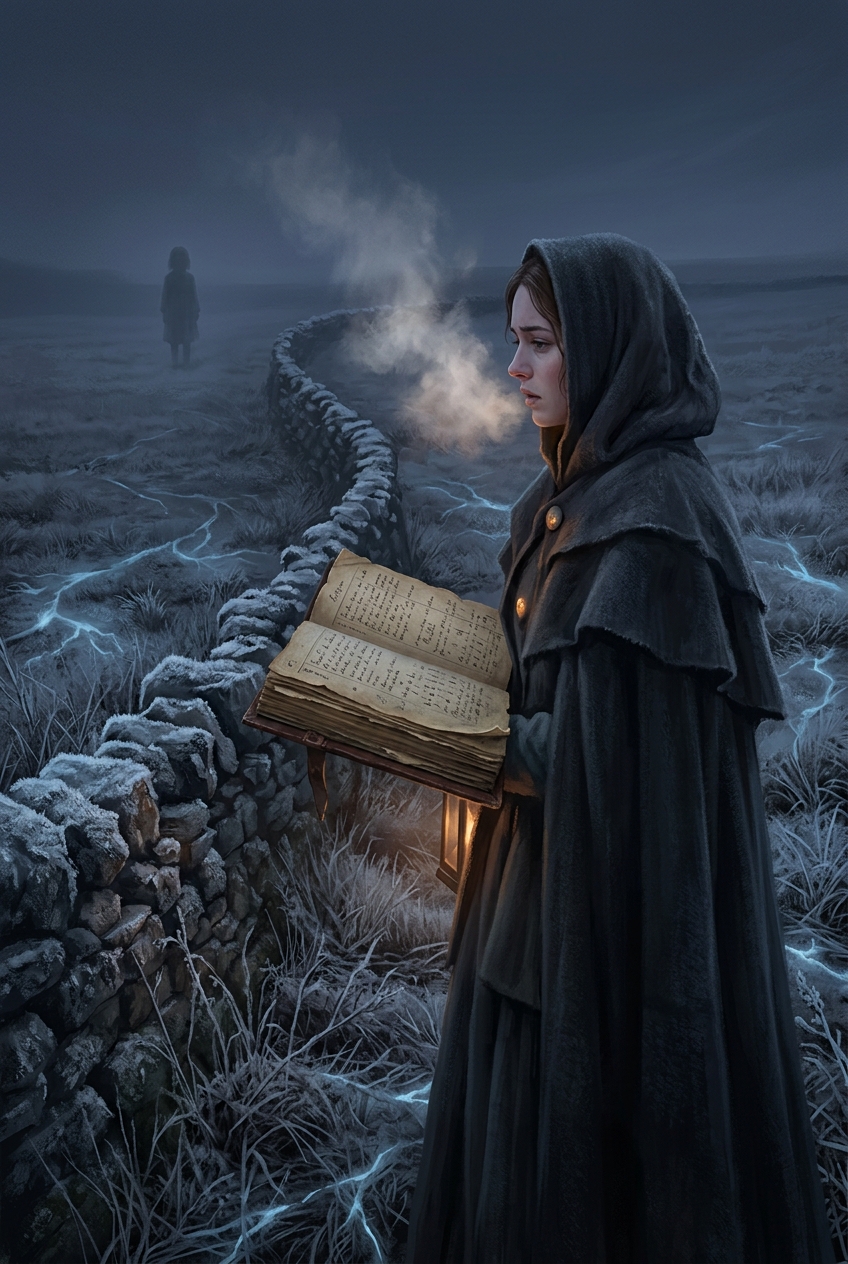
The frost came down hard that night, the way he'd known it would. She put on his coat, which smelled of him and of tallow and of the field, and she lit the lantern and took the book, and she went out along the wall.
The far field held the cold like a bowl. Her breath went ahead of her in the lantern light and hung there. She walked the boundary the way she had watched him walk it, stopping and reading, stopping and reading, and her voice went out over the frost and did not echo, because frost eats sound. Coll. Ferry. Ashe. Wyeth. Nan Tunny and the six under her, and she said each of the children slow, because they were children. The names went into her and out of her and into the ground, and the ground took them, and the field, section by section, seemed to settle, the way a restless animal settles when a hand it knows moves down its flank.
By the time she reached the far corner where the wall ran up to the treeline, the moon was down and the frost had put a grey fur on everything, on the stones, on the black grass, on the shape that stood just inside the trees.
It was no taller than the wall.
Marren stopped. The lantern shook and she made it stop shaking. The child stood with the trees behind her and did not come forward and did not go back, and Marren could see, in the poor light, that she was waiting the way only children and the dead can wait, wholly, without the least idea that waiting might ever end. She had been waiting eleven years. She had forgotten the name that would let her lie down. She had forgotten she had ever had one.
"I know," Marren said. Her voice came out steadier than she was. "I know. You were sealed in the book. Nobody said you on the nights. That wasn't yours to answer for."
She knelt in the frost and opened the ledger on her knees and worked her cold thumb under the sealed curl of the leaf. It gave slowly, the dried paper parting with a sound like the smallest tearing of skin, and the hidden name came up into the lantern light, whole, the ink brown and patient beneath the ruin of the scratch above it.
Grace Coll. Four years old. Bracketed, in the same old hand, to a mother and a father laid in the same week.
"Grace," Marren said.
The shape at the treeline moved. Not toward her. Down, a loosening, a settling, the child at last remembering the weight she was meant to carry back into the ground. But she did not go. Half-laid, sinking, she held at the edge of the trees, because a name said once, eleven years late, is a true thing but not yet a whole one, and Marren understood that the field would take the child now, tonight, but that it had been owed two names off this ruined page, and it would not close over the one while the other lay scratched and unsaid above it.
She looked at the black wound in the leaf where a pen had tried to unmake her mother.
She could feel the old bargain waiting under the night like a floor under a rug. A living name. She had one. She had, God help her, her grandfather's, given to her freely from the bed with his eyes open. She could say it, and pay everything, and be done.
She put her thumb over the scratch instead, over the ghost of the letters pressed through from the far side, and she read her mother the way she had first read her, with her hand.
"Iris Renn," Marren said.
The name went out of her into the frost.
It had been unsaid eleven years, scratched and sealed and grieved into silence, and the field had been one name short every single night since, and now it was not. The ledger, under her hand, seemed to lie flat in a way it had not lain before, the two wounded names on the ruined page spoken at last into the same cold air. At the treeline the child let go. She went down into the ground the way frost goes into ground, without violence, without sound, remembered, and the trees behind her were only trees.
And into Marren, kneeling in the dark with her grandfather's coat around her, something came that had not been there when she walked out. Not a ghost. A memory, arriving eleven years late along a road that had been scratched shut and now was open. A lullaby with no source she could name, in a voice she had never heard and knew at once. A pair of hands doing up the buttons of a small coat. The smell, absurd and exact, of iris flowers in a jar on a sill. Her mother, given back to her not alive, the field is not kind enough for that, and the dead it takes it keeps, but given back to be missed, to be grieved, to be a person she had lost instead of a story she had been told. It was the difference between a scar and a wound. She knelt in the frost and wept for a woman she had that moment met, and been raised by, and lost.
The sky was going pale when she came back along the wall. She let herself into the house and the fire was low and her grandfather was very still in the bed, his face turned to the window and the coming light, and it was the easiest she had ever seen it.
"Iris," he said, without opening his eyes. Not a question. A name he had not been able to hold in his mouth for eleven years, come back to him at the end down the same open road. He said it the way you say a thing you have finally been allowed to set down. Then he did not say anything else.
Marren sat with him until the frost outside began to smoke off in the first of the sun. Then she took the book down from the mantel and unwrapped it and set it on her knees, and she found a pen and the ink, and beneath the black scar on the fourth page from the last, in a clean new hand, the first name in a hand that was hers, she wrote her mother back into the book of the dead where the world could no longer reach to take her.
She understood, doing it, the thing her grandfather had spent his whole life almost saying. The telling had never been a way to hold the dead down. It had never been a fence. It was the other thing, the only thing the living have ever had against the dark of the far field and every field. You say the name. You say it aloud, once, so they know they are kept. She would walk the boundary every last night before the frost for the rest of her life, and she would say all four hundred of them, the strangers and the children and the six small Tunnys and Grace Coll who was four, and at the end, in the far corner by the trees, where you could forget a person was ever there, she would say the two on the ruined page last and slowest of all.
A kept name lies quiet. But it does not lie forgotten. She had learned, out on the frost, that those were never the same thing, and that all the long grief of her family had come from mistaking the one for the other.
She wrapped the book in its oilcloth and put it back above the fire, where the damp could not reach it, and went to see to her grandfather, and to the morning, and to the long bright ordinary work of remembering.
More from Short Stories