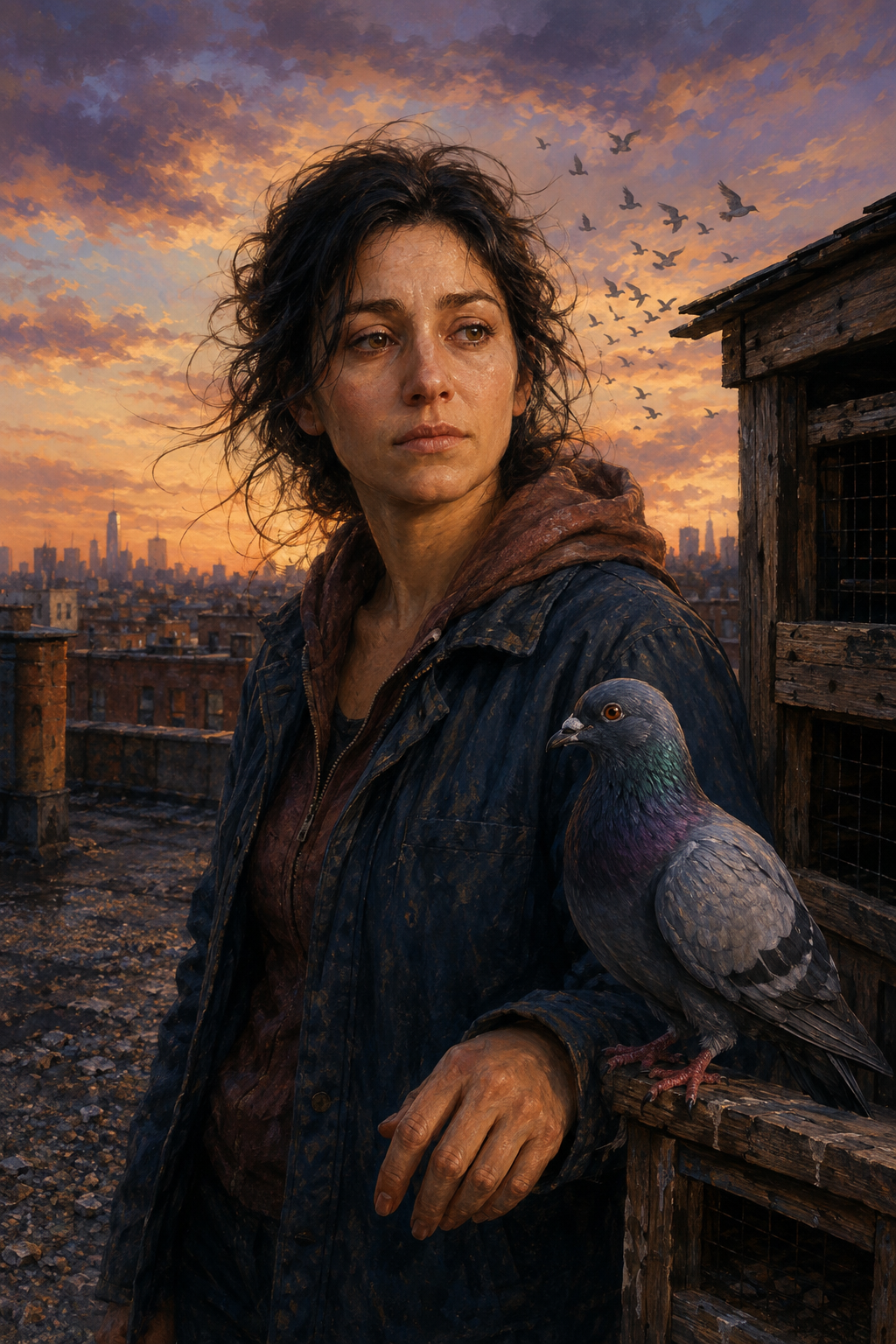
Hangfire
The plow gave up two miles under the station, so I walked the rest with the sled harness sawing my collarbones and the wind coming off Anthem sideways, mean and full of grit.
Synopsis
Sent up the mountain to commission a new automated avalanche-control system and relieve its aging caretaker, a young state technician discovers that the automated releases keeping the town of Kettle safe all winter never happened: the gas towers were never even switched on. Old Mott, his knees ruined, has been climbing onto loaded slopes in the dark by hand, throwing charges to bring the mountain down in pieces and forging the digital logs so the funding and the town would survive one more season. When a record warm storm loads the Throat toward a slide that will reach the school by dawn and Mott can no longer make the climb, she takes his crash-course, his charges, and his choice, and goes up alone into the storm to fire the slope herself. On the crown she throws four clean shots and then hits a hangfire, a live charge that won't detonate over the most dangerous ground, and has to cross the loaded slab anyway to seat the last shot. She survives by a margin, brings the whole gut down four hundred yards above the sleeping town, and comes back to inherit not just his work but his lie, signing her name under his in the pencil ledger no government computer will ever see.
Hangfire
Story
The plow gave up two miles under the station, so I walked the rest with the sled harness sawing my collarbones and the wind coming off Anthem sideways, mean and full of grit. By the last switchback my eyelashes had frozen into little combs, and the light had gone the flat blue that means the storm is still deciding how bad it wants to be.
Mott was on the porch when I came up out of the trees. You can tell a man who has done one thing for forty years by how he stands, and he stood like the mountain was something he was leaning against on purpose. He didn't wave. He watched me shrug off the harness and stamp the pack down, and when I got close enough to hear him over the wind he said, "You're smaller than your file."
"You read my file."
"Somebody had to." He held the door with one hand, the other staying flat against the frame, and I noticed he didn't step aside so much as pivot, careful, like the porch boards owed him money. Inside it was warm in a way I hadn't let myself hope for: a woodstove ticking, coffee scorched down to tar, a rack of wool that smelled of woodsmoke and forty winters. "State send you up to bury me, or just to watch?"
"To commission the new towers. Do the handoff." I set the pack against the bunk. "Nobody said anything about burying."
"They never do," he said, and shut the door on the weather.
The station was one room and a loft, a stove, a bank of monitors mostly dark, and a topographic map of Anthem taking up the whole west wall. Somebody had inked the avalanche paths across it over the years, red for the ones that could reach the road, black for the ones that could reach the town. The Throat was the worst of them, a long steep gut that funneled straight down toward Kettle. Eleven hundred people down there, Mott told me later, who have never once in their lives looked up.
He gave me the loft and took the bunk by the stove, and I understood why when I watched him lower himself onto it that first night: he went down in stages, one hand on the rail he'd bolted to the wall, the other braced on his own thigh, and the breath he let out at the bottom was the breath of a man setting down something heavy. There was a plastic bucket beside the bunk. I didn't ask. You don't, the first night.
In the morning the storm had backed off to flurries, a lie the sky tells before it commits, and I sat down to do the boring part of my job, which was to reconcile the station's transmission logs against the new remote system before I signed off on the handoff. The towers were already up out there, three of them along the ridge above the Throat, painted the safety orange the state loves, gas exploders that could fire a shock over the snowpack on a schedule and bring the slope down on our terms instead of its own. RACS, the paperwork called it. Remote Avalanche Control System. No more sending a human out onto a loaded slope with a charge in his hands. That was the whole point of the money.
The logs said the system had been working all winter. Controlled releases up and down the ridge, neat timestamps, RACS-3 firing on the Throat at 0400 after every big load. Textbook. The town safe, the road open, the numbers clean enough to keep the funding alive.
I got up and went out to the towers to check the gas.
RACS-3 read empty. Not low. Empty, the way a thing reads empty that has never been filled. I crouched in the snow and traced the line back to the manifold and found the certification tag still zip-tied to the valve, uncut, the propane contractor's signature line blank. The tower had never been commissioned. It couldn't have fired a shot all winter. Neither could the one beside it; its anemometer, the little spinning cup that told it whether the wind was safe to fire in, had seized in November and never spun again. I stood there with the tag in my fingers and the wind trying to take my hood, and I did the arithmetic three times because the first two times it came out wrong.
The Throat had run controlled all winter. The machine that was supposed to run it had never once turned on.
I went back inside. Mott was feeding the stove, or trying to; he couldn't get down to the low door of it, so he was breaking kindling on his knee and pitching the pieces in from a crouch that cost him. I stood in the doorway and let the cold roll in past me until he looked up.
"The gas is empty on Three," I said.
"Is it."
"It's never been filled. The line's virgin. And Four's wind sensor died before Thanksgiving." I held up the tag. "Your logs say the Throat's been fired eleven times since December."
He set down the hatchet. He looked at it, not at me. "Coffee's fresh," he said, "if you can stand it."
By the door there was a boot tray, and in the tray a pair of mountaineering boots, the old kind with the wire welts, and they were wet. Not damp. Wet through, salt-lined, the wet of boots that had been out in deep snow inside the last day. Above them on a nail hung a throw bag, and when I lifted it, it was light. I set it down and went to the metal ammunition can under the workbench and thumbed the latch. Two-kilo cast charges, the kind you light by hand and throw. There should have been a case. There were four.
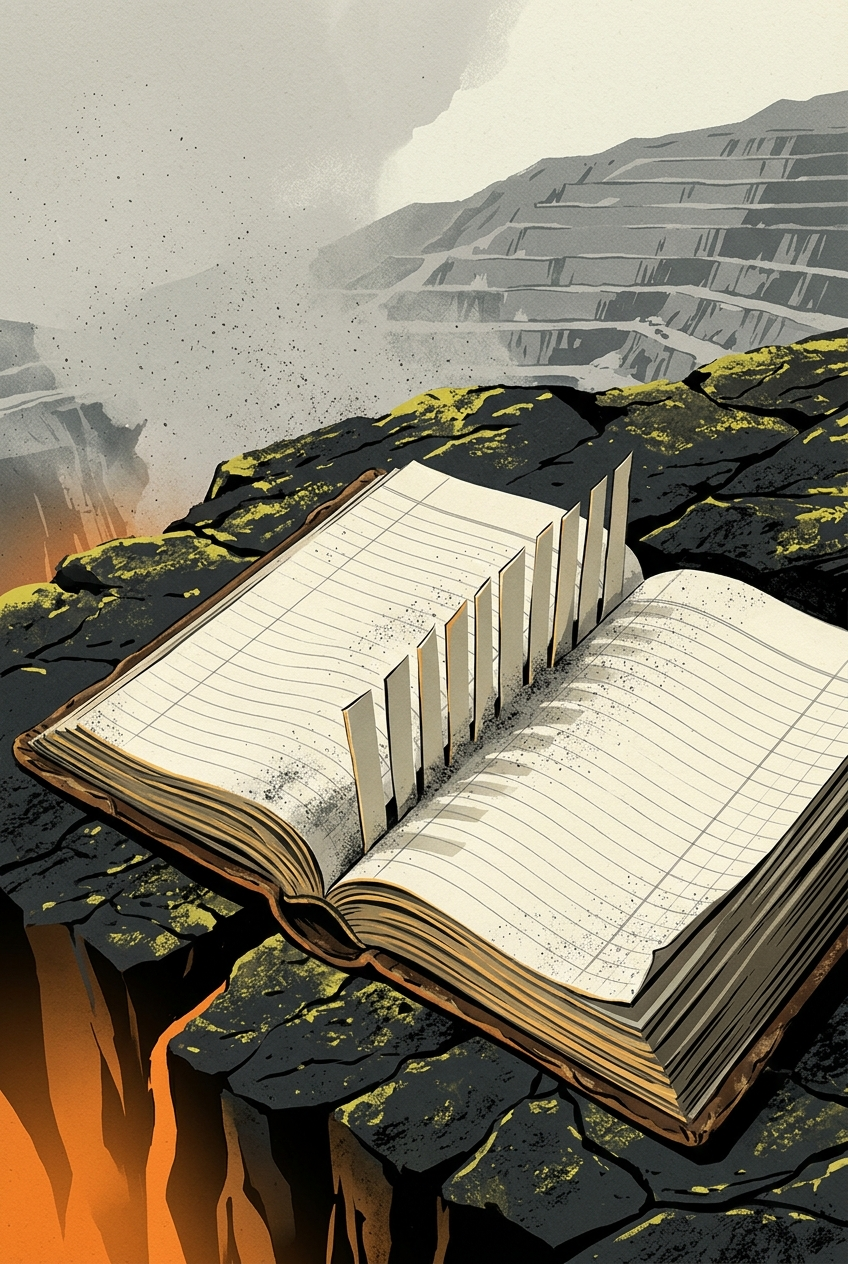
And there was a coffee tin on the shelf that didn't have coffee in it. It had a ledger, a real one, pencil, water-swollen, and every entry was in a hand that got shakier toward the recent pages. Dec 2, Throat, two shots crown, one hangfire recovered next AM. Dec 19, Sisters, three shots, good release, knees bad. Jan 8, Throat, could not summit, threw from the shoulder, partial. On and on. A whole winter of a man walking out onto loaded slopes in the dark with fire in his hands because the machine that was supposed to do it had never been switched on, and then coming home to type a lie into a government computer so the state would keep believing the machine worked, so the money would keep coming, so the town at the bottom of the Throat would keep waking up.
"They were going to close the station," Mott said behind me. He'd gotten himself into the chair by the stove. "Two winters back. Said the automation made a caretaker redundant. I told them fine, put in the automation, and I'd stay on to babysit it till it proved out." He turned his coffee cup a quarter turn on the arm of the chair. "Contractor never came for the gas. Priorities. Then the sensor. Then it was February and something had to fire on the Throat, and the only thing up here that worked was me."
"You forged federal control logs."
"I brought a mountain down eleven times so it wouldn't come down on a schoolyard," he said, mild as weather. "You can call it what you want in your report."
I didn't say anything. Down in Kettle the smoke was going up straight from the chimneys, a whole town of people making breakfast under a slope one old man had been holding up with his hands.
"The knees," I said finally.
"Are done." He said it the way you'd report a fact about someone else. "I get up the shoulder if I start at midnight and don't stop. I can't get up the crown anymore. Last two storms I threw from as high as I could reach and hoped." He looked at me then, and for the first time he looked his age, which was more than the file said. "The towers'll be good, come spring. Contractor's booked for May. I just needed the winter to hold."
The barometer on the wall had been falling since I'd been watching it. I looked at it now and it had kept falling, faster, the needle drifting toward the little brass screw somebody had set decades ago at the pressure where Anthem got dangerous.
"The winter isn't going to hold," I said.
It came in off the coast that afternoon, an atmospheric river, the warm wet kind that we hadn't gotten this high or this often when Mott started and got every year now. The forecast on the one screen that still worked put four feet on Anthem by dawn, heavy, and it would land on the January facets, that layer of sugar snow buried deep in the pack that never bonds to anything. Mott didn't need the screen. He sat by the window and listened to the wind change pitch, and around dusk the mountain gave the first whumpf, a sound you feel in your sternum before you hear it, the sound of a buried layer collapsing under new weight across acres at once.
"That's the Sisters settling," he said. "The Throat'll go tonight. On its own, around four, five in the morning, when the load peaks." He said it like a tide table. "It'll run the whole gut. First time in my life it'll run the whole gut, all the way to the flats."
The flats where the county had let them build the new houses. And the school, which sat on the old debris fan because the old debris fan is flat and cheap and nobody alive remembered why it was flat.
"Then we fire it first," I said. "Tonight. Before the peak. Bring it down small, in pieces, before it can go all at once."
"The towers can't."
"I can." It was out of my mouth before I'd finished deciding. "I did two seasons on a hand route in the Wasatch. I've thrown a thousand shots."
"Not on the Throat you haven't." He turned in the chair, which cost him, so that he was fully facing me. "It's a slope you have to summit to fire right, up on the crown where the wind cross-loads it, and the only way up is the shoulder, and the shoulder tonight is going to be a river of snow trying to take you down to Kettle ahead of the slide. I can't make it. That's the whole problem. That's been the whole problem since November." He wasn't warning me off. He was telling me the exact shape of the thing, so I could decide with all of it in my hands. "If you go, you go alone, and if it goes while you're on it, nobody's coming."
"If I don't go, it takes the school at four in the morning."
He looked at me a long moment. Then he pushed himself up out of the chair, both hands, and crossed to the workbench, and he taught me the Throat.
He drew it on the back of a fuel receipt: where the crown always fractured, the rock band you could shelter behind, the one gully you never crossed loaded because it was the trigger point for the whole face. He taught me the sequence, five shots, the order, the spacing, where to stand for each throw so the slope ran away from me and not over me. He made me say it back. He made me say it back again. He filled the throw bag himself, sitting down, tamping the fuses, and his hands didn't shake at all when they had a charge in them, which told me more about the last forty years than anything he'd said.
"Cap and fuse, ninety seconds on this cut," he said, pressing the last one into the bag. "You light, you throw, you get behind the rock, you count. If you count past ninety and it hasn't gone." He stopped.
"Hangfire," I said.
"You leave it. You hear me? You do not go look for it. A hangfire's just a shot that hasn't made up its mind. It'll go when it goes, and you don't want to be there having a conversation with it." He cinched the bag and held it out to me. "Your father teach you any of this?"
"I don't have a father," I said, which was true enough, and took the bag.
I left at nine with a headlamp I mostly kept off, because the snow throws the light back in your face and you see better in the dark once your eyes give up wanting more. The shoulder was already moving. Not sliding, not yet, but breathing, little sluffs peeling off with every step, the surface running downhill in ribbons that grabbed at my ankles and wanted the rest of me. I kicked steps and kept three points and did not look down at the lights of Kettle, because Kettle was the reason and not the destination, and a slope will use anything you love to pull you off it.
The wind on the crown was a live thing. It came across the top of the Throat carrying snow it had stolen from the far face, cross-loading the slope exactly the way Mott's pencil had said, building the very slab I was there to kill. I got behind the rock band and it was like stepping into a held breath, the wind gone over the top of me, and I could hear my own heart and the tick of the cooling charges in the bag.
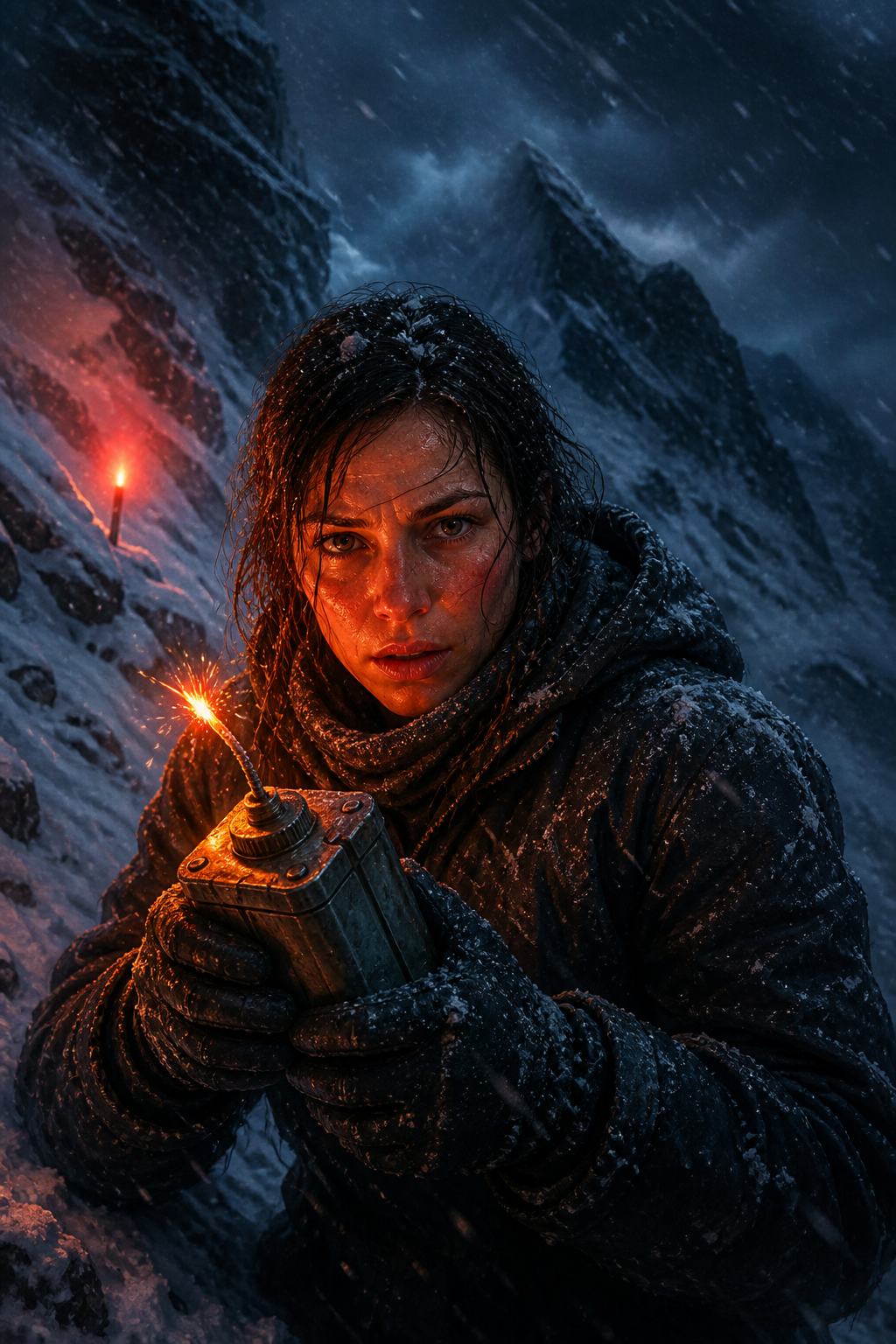
First shot. I lit it and the fuse caught with a hiss and a stink of sulfur, and I threw it out onto the crown the way he'd said, and got small behind the rock. The count in my head. At ninety the slope jumped. Not a boom so much as a fist through the floor of the world, and a section of the crown the size of a house fractured off and started down the gut, dragging more with it, the whole thing hissing and grinding as it went, and then it was gone into the dark below me and the mountain was lighter by that much.
Second shot, forty feet along the crown. Then the third. Each one took a piece of the Throat down small and controlled, the way you take a wall down brick by brick instead of waiting for it to fall on you. My hands learned the rhythm. Light, throw, shelter, count, feel the mountain give. I started, God help me, to think I might live through this.
The fourth shot didn't go.
I lit it and threw it clean, and I got behind the rock, and I counted, and at ninety there was nothing. At a hundred there was nothing. At two hundred the wind was the only sound, and out there on the snow forty feet away was a live charge sitting over the most loaded, most triggered, most dangerous stretch of the whole face, the trigger gully, the one you never cross, and it had not gone off, and the load was still building with every second, and somewhere under my boots the January facets were bearing more weight than they had ever borne.
You leave it. A hangfire's just a shot that hasn't made up its mind.
But the fifth shot was supposed to go beyond it, past the gully, on the far anchor, and I couldn't get there without crossing the trigger, and I couldn't fire the anchor from here, and if the anchor didn't go then the whole east half of the Throat was still hanging up there fully loaded, still enough to reach the school, and the peak load was coming at four whether I was ready or not. I crouched behind the rock and did the worst math of my life, which was the arithmetic of what one live charge on the snow was worth against eleven hundred sleeping people, and I already knew what Mott would have done, because Mott had done it eleven times and written it in pencil in a coffee tin, and I hated him for the clarity of it.
I went out from behind the rock.
I did not go toward the hangfire. I went the long way, above it, along the very lip of the crown where the fracture would run below me if it ran, out toward the far anchor with the fifth charge in my hand and the wind trying to file me off the top of the mountain. Every step was over the loaded slab. Every step I waited for the whumpf under my boots that would be the last thing my legs ever told me. I reached the anchor. I could see the hangfire from there, a dark lump on the pale snow, patient, waiting to make up its mind. I lit the fifth charge and I threw it onto the anchor and I turned to run and the hangfire chose that second to go.
It went with the fifth shot, both at once, and the whole east face of the Throat let go under me and beside me and below me in one enormous soft concussion that I felt in my teeth. The snow I was standing on didn't slide, quite; it dropped, the way a floor drops, six inches, a foot, and then the fracture ran downhill away from me toward Kettle with a sound like the sky tearing lengthwise, and I was on my back with no memory of falling, one glove gone, sliding, and then I stopped, because the anchor had held the little wedge of slope I was on and everything below it had gone to the valley.
I lay there a while. I want to be honest about that. I lay there in the wind and did not get up for what might have been a long time, and I watched the powder cloud rise off the runout a thousand feet below, white against the black, and drift, and settle, and the mountain was quiet in a way it had not been quiet in two days. Then I got my knees under me, and my feet, and I found my glove, and I went down the shoulder that was no longer trying to kill me because it had nothing left to throw.
The debris stopped four hundred yards above the first house. I walked out onto it at first light, over blocks of avalanche snow gone hard as furniture, and paced the distance to the fence line, and it was four hundred yards, and nobody in Kettle was awake to know it. The school sat on its flat with the flag rope tapping the pole. Smoke started up from one chimney, then another. A whole town making coffee.
Mott had the stove going when I got back up. He'd been at the window the whole night; I could tell, because the chair had been dragged there and the coffee tin was open on the sill. He didn't ask if I was all right. He looked at me long enough to see that I was, and then he looked back out the window at the Throat, which lay open now all the way down, scoured to the January facets, harmless, a slope that had spent everything it had.
"Full gut," he said. "You brought down the full gut in pieces." There was something in his voice I didn't have a name for. "I never got the whole thing at once. Not in forty years."
"There's a charge up there that didn't recover," I said. "The fourth. It went sympathetic with the fifth. It's under all that, somewhere. Live, or was." I sat down by the stove and couldn't feel my hands. "I couldn't get it. I did what you said. I left it."
He nodded slowly. He got up, in his stages, and he took the coffee tin off the sill and set it in my lap, the ledger inside it, the pencil. And I understood that he was handing me the winter, the real one, the one that lived in pencil and not in the government machine, and that he was asking me, without a single word about it, to decide which record was true.
I opened the ledger to the first blank page. Outside the sky had gone the pale gold that means the storm has finally spent itself and meant it. I could put the truth in the state's computer. The towers would be certified in May, and the money would come, and the story would say the machine had done it, which was almost worth telling for how clean it was. Or I could keep the tin.
I picked up the pencil. Feb 14, Throat, I wrote, in a hand that would learn to shake in about thirty years, five shots crown, full release, one hangfire not recovered. I signed it under the last of his entries, and my name looked strange there, new, like a boot print in snow nobody's walked yet.
Mott read it over my shoulder. He didn't say anything for a while. Then he went and put the coffee on, one careful hand on the rail, and I let him, because a man should get to make the coffee in his own house, and because somewhere up there under all that white my last shot was still waiting to make up its mind, and I figured I'd better learn to live near it.
More from Short Stories