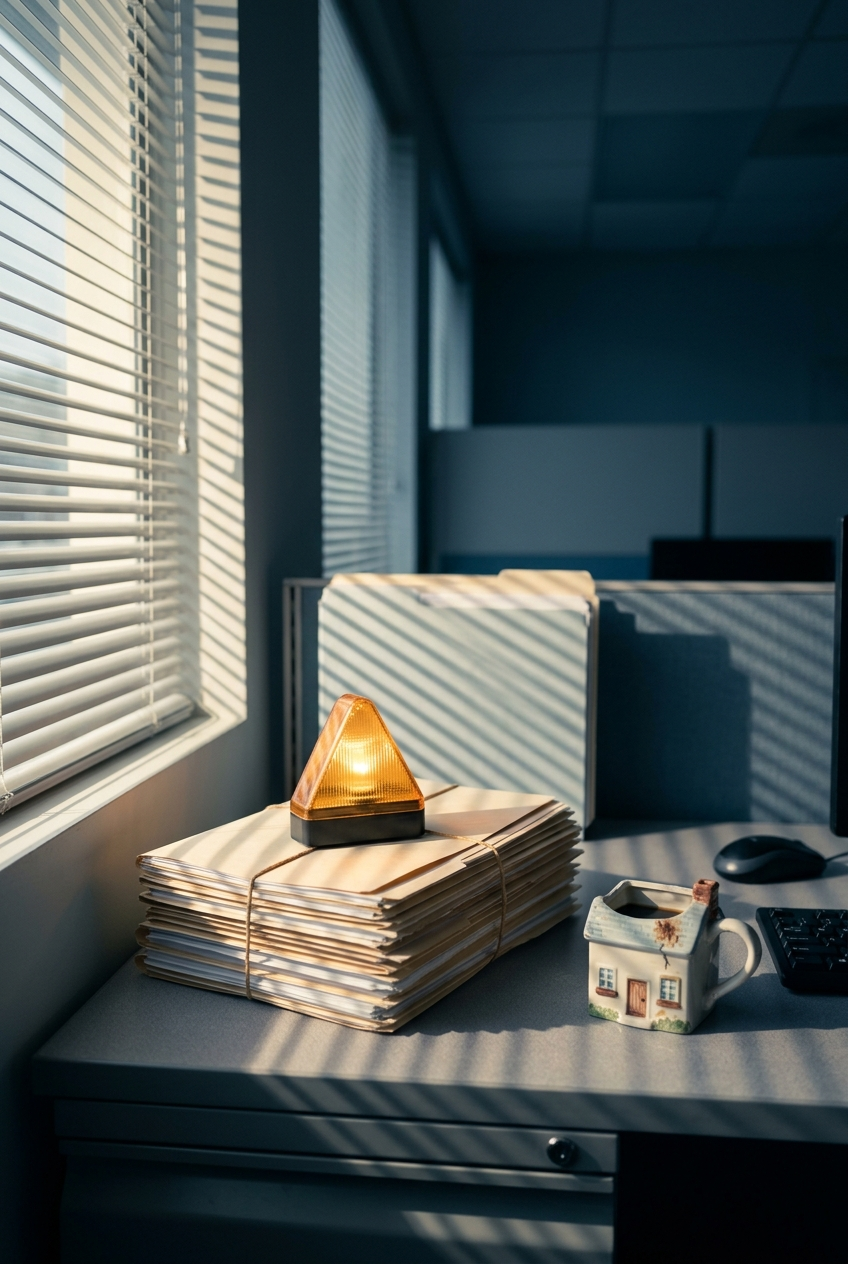
What Edwin Borrowed
Edwin Trellis brought the metal detector back on a Tuesday, apologised for the mud caked in its coil, and was dead by the Thursday.
What Edwin Borrowed — Synopsis
Nell Farrow runs the Library of Things in the English village of Sallow End, lending out the odd objects a person needs once and never again and recording every loan by hand. When her devoted patron Edwin Trellis, an eighty-one-year-old retired schoolteacher, dies two days after returning a muddy metal detector, Nell reads her ledger and finds a strange final month of borrowings: opera glasses, a bulb auger, a jeweller's loupe, a folding trolley, a cassette recorder. Read together, they describe not a hobby but a job — a frail man arranging to see a long way, find metal in the ground, dig without kneeling, read something very small, and carry something heavy home. The trail leads to the ancient yew in St. Bride's churchyard and to a forty-three-year-old scandal: the theft of the parish's 1698 silver ewer, for which the sexton's son, Tom Ackroyd, was blamed and driven out of the village while his sister Vera stayed on, tending the graves alone. In Edwin's locked garden shed Nell finds the unearthed ewer wrapped in a robin tea towel and a cassette holding his confession: young and desperate, he had taken the ewer meaning to sell it, buried it under the yew when his nerve failed, then let Tom's name be hung on his crime and kept silent for the rest of his life. Dying, he set out to make it right and got the ewer only as far as the shed. Nell carries the last little way for him — delivering his letter to Vera, phoning Tom in Canada to clear his name at last, and returning the ewer to St. Bride's. She logs Edwin's final loan in the ledger: one silver ewer, returned, forty-three years overdue, no fine.
What Edwin Borrowed
Story
Edwin Trellis brought the metal detector back on a Tuesday, apologised for the mud caked in its coil, and was dead by the Thursday. It took me until the funeral to see that those two facts belonged in the same sentence.
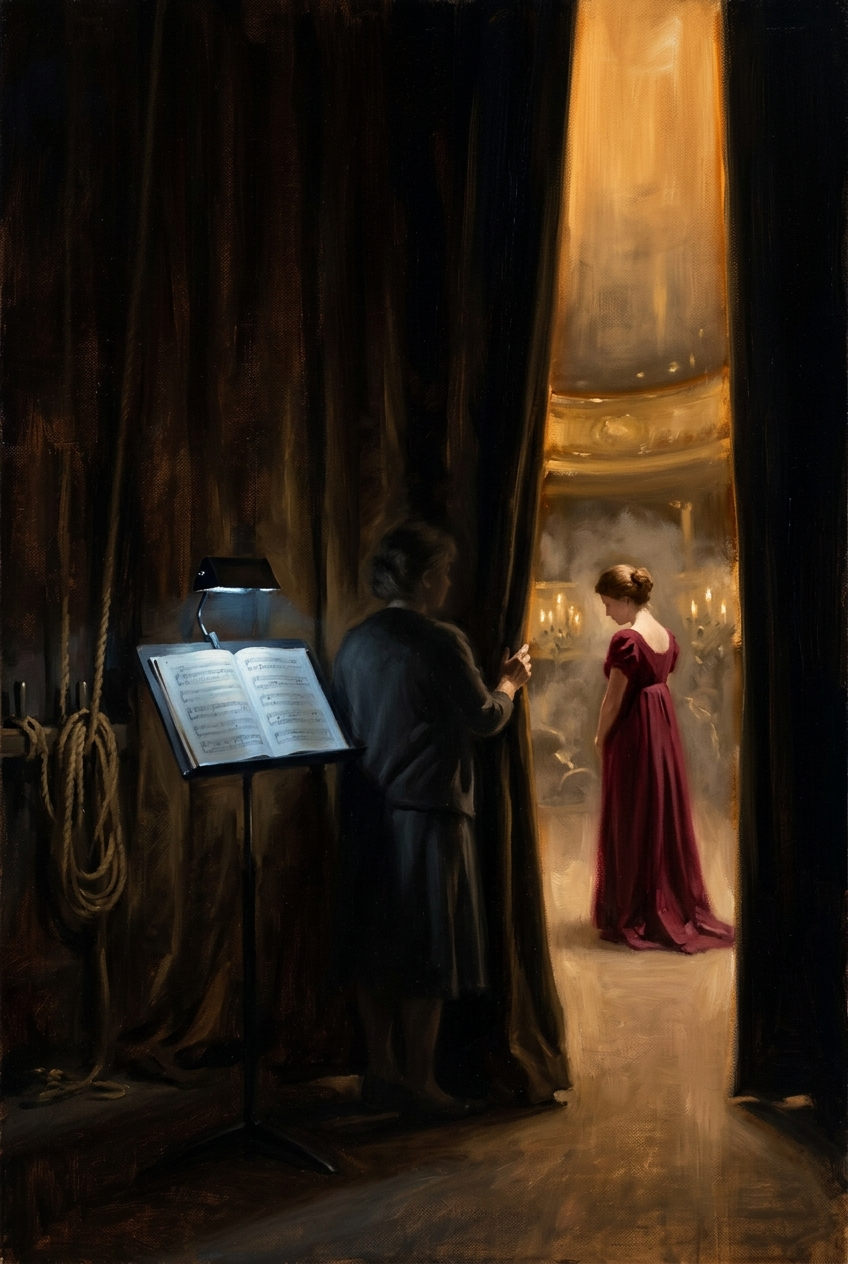
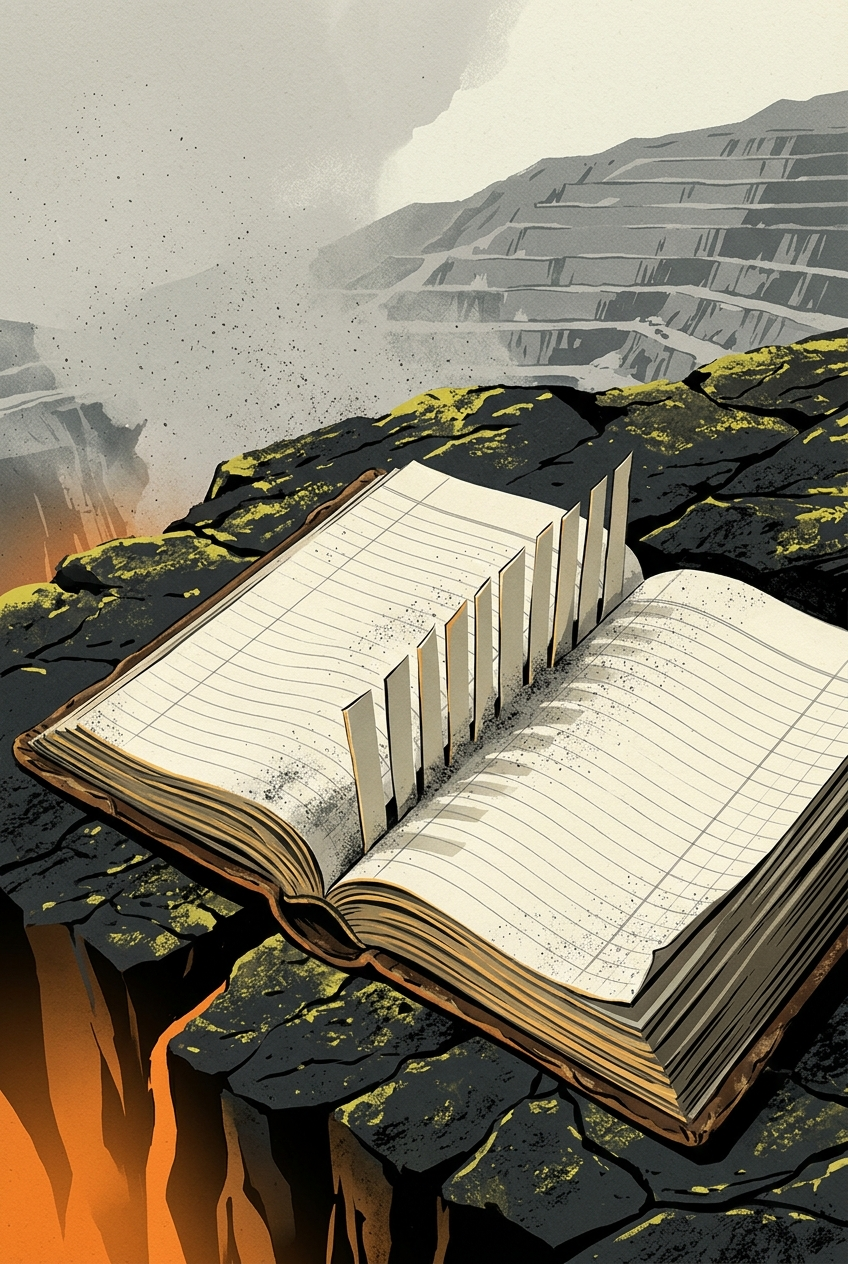
I keep the Library of Things in the old Reading Room behind the village hall, which is a grand name for a lino floor, four shelving units, and a paraffin heater I am not supposed to use. We lend out the objects a person needs once and then never again. A wallpaper steamer. A gazebo with one bent leg. A cake tin shaped like a castle that has, over the years, produced a good third of the birthdays in Sallow End. People join for a pound. They borrow, they return, and I write it all down by hand in a ledger, because the system is me, and I have never trusted a system I could not stand a kettle beside.
Edwin was my best patron. Eighty-one, a widower, retired these twenty years from teaching every child in the village to sing whether they wished to or not. He came in on Tuesdays, borrowed something improbable, and stayed for the length of a cup of tea, telling me the plots of novels he thought I ought to read. I never read them. I liked the plots better the way he told them.
So when Barbara Cleeve came to me the week after he died, wearing the particular expression she keeps for parish emergencies, I assumed it was the flowers again.
"The tin's gone," she said.
She meant Edwin's tin. Years ago he had brought in an old biscuit tin, the tartan sort, and asked me to keep it on the end of the top shelf with a card in his own hand: SALLOW END. NOT FOR LOAN. OPEN WHEN THE TIME COMES. I had asked what was inside it. "Nothing yet," he'd said, which I took for one of his jokes and filed under Edwin. It had sat there gathering the specific dust of things nobody dares move. Now the space where it had been was clean, a bright tartan rectangle in the grey.
"Rowan will have had it," Barbara said. Rowan is fifteen, does his volunteering hours with me on Saturdays, and has the sort of face adults make their minds up about early. "You leave that boy in here on his own."
"Rowan reshelved the whole non-fiction wall last month and put it in Dewey order for pleasure," I said. "He is not a thief. He is a librarian, which is worse."
Barbara left unconvinced, because being convinced is not a thing Barbara does in company. But the tin nagged at me, and so that evening I did what I do when a thing nags. I read the ledger.
Edwin's last month was there in my own writing, and it was strange the way a shopping list is strange when you find it in a dead man's coat. He had been busy. In four weeks he had borrowed more than in the four years before.
The 8th: the opera glasses, the little mother-of-pearl pair a birdwatcher left us in his will.
The 12th: the metal detector.
The 15th: the bulb auger, the long-handled kind you drive into a lawn to plant daffodils without kneeling, and the folding camp stool that lives with the fishing kit.
The 19th: the watch-mender's roll, borrowed, I remembered now, for the jeweller's loupe inside it, because his own reading glasses "wouldn't go small enough."
The 22nd: the folding shopping trolley, the tartan one, which I noticed then was a match for the missing tin.
The 24th, a Tuesday: he brought the metal detector back muddy and borrowed nothing, the first Tuesday in a month he had left empty-handed.
I sat with that list a long time. A man of eighty-one borrows tools to see a long way off, to find metal in the ground, to dig without kneeling, to read something very small, and to carry something heavy home. I told myself he had taken up a hobby. I have buried enough people to know the look of one setting his affairs in order, and this was not that. A will is a tidying. This was a man doing a job.
The job announced itself the next morning at the lychgate, in the person of Vera Ackroyd.
Vera has tended the graves at St. Bride's for as long as I have lived in the village, which is longer than I care to count, and she does it the way some people pray and others drink, as a thing done alone and not discussed. She is the last Ackroyd in Sallow End. There used to be more. Her brother Tom left in 1981, the winter the church silver went, and he did not go the way a young man goes off to find work. He went the way a young man goes when he has been accused in front of everyone he has ever known.
I was new then. I only ever had the village's version, which is the version that hardens over time into fact. The Sallow Ewer, a small silver jug St. Bride's had owned since 1698, disappeared from the vestry over Christmas. Tom Ackroyd, nineteen, the sexton's son, had a key, a temper, and the unforgivable habit of being poor in a place that has never pardoned anyone for it. The ewer was never found. No charge was ever brought, let alone proved. It did not need to be. He sailed for Canada in the spring, and the Ackroyds stopped being asked to things.
"You're the tin woman," Vera said, when I wished her good morning. She has a way of naming a person by their least dignified feature. "He talked about your shed, at the end. Edwin."
"You saw him at the end?"
"He came up here." She nodded at the yew by the north wall, the oldest thing in the churchyard, older than the church, the kind of tree that was here before the argument started and will be here after it is settled. "Three times, four. Stood by the yew looking at the headstones through a little pair of glasses. Pacing it out, heel to toe. I thought he'd gone soft in the head." She scraped moss off a name with her thumb. "Asked me which grave was our dad's. As though he hadn't sung half the funerals in that church himself."
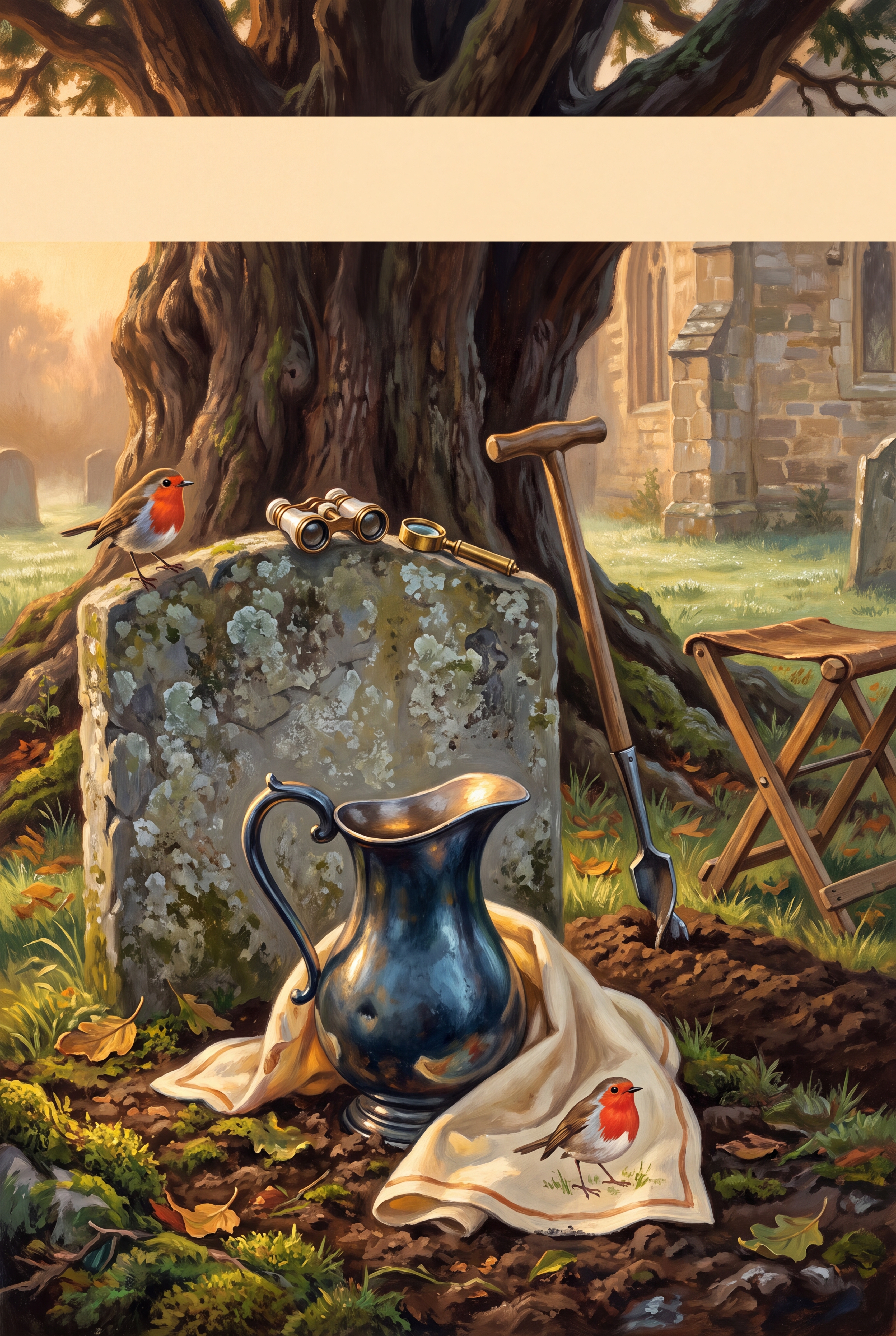
I said something kind and useless and walked home the long way, past the yew, where the grass by the north wall had been turned over and pressed back down in a neat oblong, the way you tamp a seedbed. A robin was working it for worms. I stood there until I was cold, and then I understood the shape of what Edwin had been carrying up the hill, and it was not, in the ordinary sense, a hobby.
The vicar, who is young and gentle and frightened of Barbara, asked whether I would collect the library's property from Edwin's cottage before the house-clearance men came. It was the kind of errand nobody wants and everybody is relieved to hand to the tin woman. I took Rowan, because he can carry, and because I wanted Barbara to see him trusted with a dead man's keys and made to look foolish for a change.
Edwin's cottage had already begun the business of forgetting him, the rooms going quietly impersonal the way they do. But the shed at the bottom of the garden was locked, the key was on the ring the vicar had given me, and inside it was forgetting nothing at all.
The folding trolley stood in the middle of the floor. On it, wrapped in a tea towel with a robin on it, was the ewer.
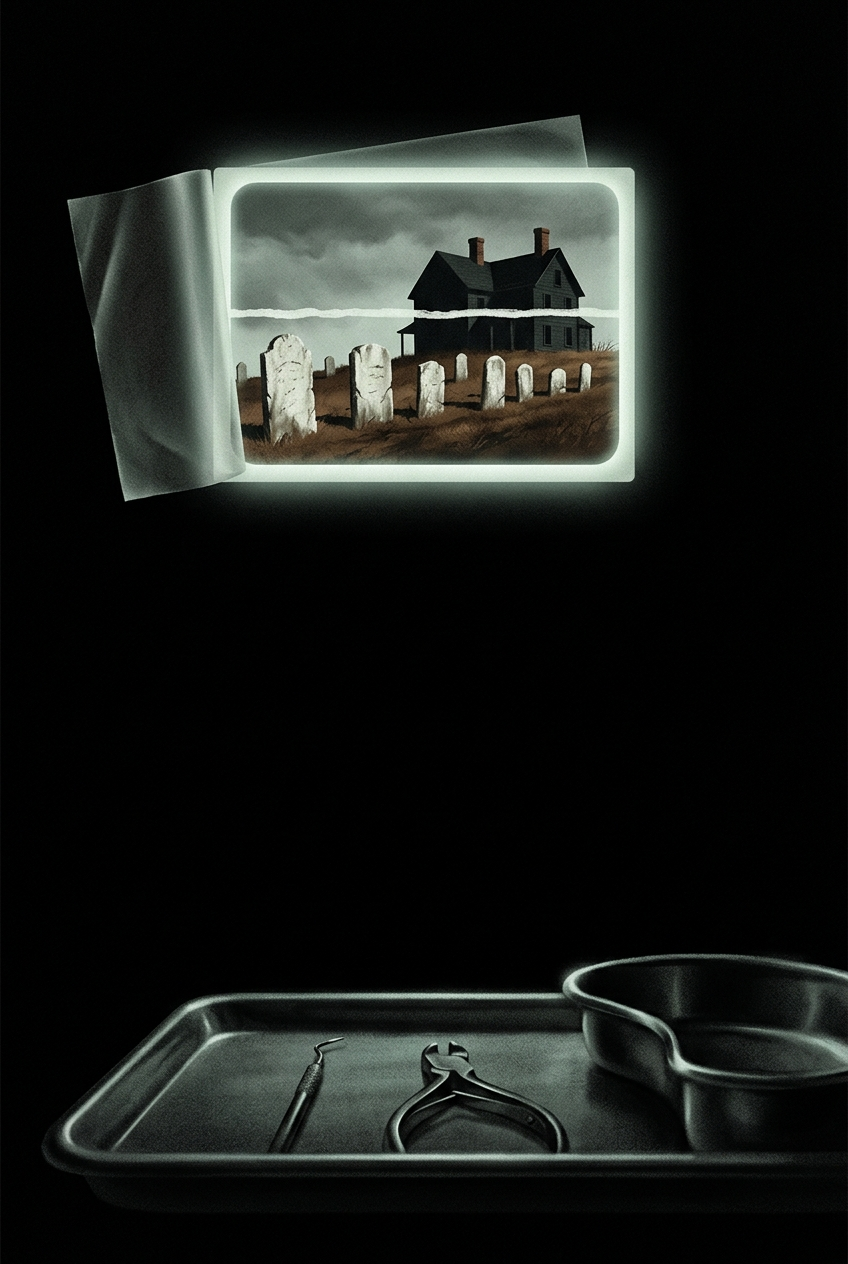
I knew it before I lifted the towel, the way you know a face in a bad photograph. Small, heavier than it looked, black-brown with the tarnish of forty years underground, a soft dent in one shoulder, and the hallmark still legible under the loupe he had left beside it, once you borrowed the eyes to read it. The bulb auger leaned in the corner with churchyard clay still on the blade. The camp stool. The opera glasses in their velvet sleeve. Every overdue item in my ledger, gathered into one small shed like a confession laid out in tools.
And on an upturned seed crate, the cassette recorder from our media kit, wound back to the start.
Rowan looked at the ewer, then at me. "Is that stolen?" he asked, in the careful voice of a boy who has been suspected of things and would rather know where he stands.
"It was," I said. "A long time ago. I don't think it is any more." I put my thumb on the play button and, God help me, I hesitated, the way you hesitate at a door you have knocked on knowing the news is bad. Then I pressed it, because Edwin had wound it back to the start for whoever came, and I was whoever came.
His voice filled the shed, thinner than in life but unmistakably his, the voice that had told me a hundred plots over a hundred cups of tea.
"This is Edwin Trellis, and I am speaking it because my hand has stopped being any use for the truth. If you are hearing this, I have run out of Tuesdays. Nell, I expect it is you. You are the only one who reads the ledger."
Rowan sat down slowly on the trolley's edge. I stayed standing. It felt like the sort of thing you stand for.
"In the winter of 1981 I took the Sallow Ewer out of the vestry. I want to be plain, because I have had forty-three years of not being plain. I was not out of my senses. I meant to sell it. Marion was ill, there was a bill I could not meet, and I told myself I would have it back in its place by Easter, the way a man tells himself anything at two in the morning. I got as far as the churchyard with it under my coat. And I could not do the thing. So I did the coward's half of the thing instead. I buried it under the yew, where the ground stays soft, and I promised myself I would dig it up when I was braver. I was never once braver."
A blackbird started up outside, loud and ordinary. The tape ran on.
"Then they took Tom Ackroyd's name and hung it on my crime, and I let them. I stood in the choir stalls at the carol service and let them. That is the part with no dressing on it. A boy lost his home so that I could keep a good opinion of myself, and I kept it, and it was worth nothing, and I have carried the ewer every day of my life even while it lay in the cold ground doing nobody any good."
I thought of him on his Tuesdays, borrowing my castle cake tin, telling me plots. Carrying it the whole time.
"I have got it up now. It cost me a deal of borrowed cleverness, and one dishonest afternoon telling Vera Ackroyd I had gone soft in the head, when the truth is I have never in my life been thinking more clearly. The ewer is clean. The hallmark is good, leopard's head and the date letter, I read it with your loupe, Nell, and I wept, which is a foolish thing to do over a silver jug. It belongs to St. Bride's. Tom Ackroyd belongs to this village. And I am sorry, which is a very small word for the size of the thing it is being asked to carry."
A pause on the tape, and the click of an old man swallowing.
"Tell Vera the letter is in the tin. I took it back from your shelf, Nell. It was never nothing that was in it. It was the truth, waiting, and I could not leave it to be opened after I was safely gone, because that would have been the coward's half again. I wanted to bring it up the hill myself. I wanted to knock on Vera's door with the ewer in my hands and my name where his has been. I have got the ewer as far as the shed and no farther. If you are hearing this, then the last little way is yours. I am sorry to hand you a heavy thing. It is the only kind I seem to have left."
The tape hissed on into blank. Rowan reached over and stopped it, gently, the way he handles the old spines on the non-fiction wall.
"He wasn't going to let it wait," the boy said. "For after."
"No," I said. "He'd waited enough for one life."
We took the tin from the crate, the tartan lid stiff with age, and inside was a single letter in Edwin's careful teacher's hand, folded round a Canadian address so old it had been copied out fresh in newer ink underneath, the way you keep a lifeline current. It was addressed to Vera and Tom, both names, as though he had never let himself think of the one without the other.
I did not read it. It was not mine to read. But I carried it up the hill that afternoon, with the ewer on the trolley and Rowan steering the bad wheel, and we knocked on Vera Ackroyd's door, which is a thing that had not happened, I think, in a very long time.
She read the letter standing on her own step and would not come in out of the cold to do it. When she finished she folded it back along its creases, exactly, and looked at the ewer on the trolley for a while without touching it.
"Forty-three years," she said, "and it was under the tree the whole while. I've weeded round that yew a thousand times." She said it not to me, but to the tree, up the hill, behind the wall. Then she did touch the ewer, one finger on the dented shoulder, the way you touch a thing to be sure it is real and not a kindness someone has invented for you.
"Is he alive?" I asked. "Tom."
"Kelowna," she said. "Sixty-four. Fixes boat engines." A muscle went in her jaw. "Never came back. Wouldn't. Said the village had made up its mind and he wasn't going to spend his one life asking it to change." She looked at me then, properly, for perhaps the first time in twenty years. "You'd better telephone him. He won't believe it from me. He'll think I've finally gone the way of our mother."
So I telephoned a man in Kelowna, British Columbia, on a Sunday evening, and read a dead schoolteacher's confession down the line to him while his sister sat in my Reading Room with a cup of tea going cold in her two hands. There was a long quiet on the far end when I finished, the particular quiet of a man who has been braced against a thing for so long that he does not know how to stand once it is lifted. Then he said, in an accent gone half to Canada, "Say the part about the choir stalls again." I said it again. He made me say it a third time. Then he laughed, a wet and terrible and wonderful sound, and said, "The old fraud. Telling everybody's plots but his own."
St. Bride's has its ewer back on the altar, and there was a small piece in the county paper that got Tom Ackroyd's name into print at last in the shape it should always have worn. Vera comes to the Library of Things on Saturdays now. She sits with Rowan and tells him which of the graves belong to whom, and he writes it down, because he cannot bear a thing to go uncatalogued, and neither, as it turns out, can she. Barbara Cleeve told everyone she had suspected the truth all along, which is what Barbara does with truths, and I let her, because Edwin taught me the cost of not letting a small thing go and I have decided to spend my forgiveness on the living.
The tin came back to the top shelf. I made it a new card, because the old one no longer quite fit the case. SALLOW END, it still says, and NOT FOR LOAN. But underneath I have written, in my own hand: THE TIME CAME.
And I wrote Edwin's last loan in the ledger, because the system is me and always has been, and a thing is not truly returned until it is written down. Returned, the entry says, in the column I keep for such things. One silver ewer, property of St. Bride's. Then the date. Then, because there is a box on my ledger sheet for it and Edwin would have wanted the sum done honestly, the length of the loan.
Forty-three years, I wrote. No fine.
There is no fine large enough, and there is no fine at all. Some things you can only bring back late, and the lateness is not the failure. The bringing back is the whole of the mercy, and it is worth borrowing every clever tool in a village shed to manage even the last little way of it. Edwin got it as far as the shed. We are all of us, I think, only ever asked to carry the last little way for one another, and to keep good enough records that whoever comes after can read the trail and know which way the heavy thing was going.
I keep the Library of Things behind the village hall. We lend out what a person needs once and never again. And I have learned to read a borrowing list the way a doctor reads a chart, because a man will tell you, in the plain small objects he asks for, the whole shape of the thing he has finally found the courage to do.
More from Short Stories